Beekeeping Gets Smarter: Sensors, Data and AI
For most of its history, beekeeping has been a craft of observation. You lift the lid, read the comb and listen to the hum. That craft is not going away, but a new layer is forming around it, made of sensors, wireless networks and machine learning. The question is no longer whether hives can be measured, but what the numbers can reliably tell a beekeeper.
AI in beekeeping is still young, but it is moving fast. Hive sensors now record weight, temperature, humidity and sound around the clock, and algorithms are being trained to turn those readings into early warnings about swarming, queen loss and colony decline. This article looks at what has emerged, what the evidence supports, and what it means for apiaries in East Africa.
From Craft to Data
A hive is a closed system, and the traditional way to learn about it is to open it. Each inspection gives valuable information, but it also disturbs the colony, takes time and captures only a moment. Between visits, a lot can happen: a nectar flow can start and end, a queen can fail, a colony can leave.
Precision beekeeping, as the field is called, tries to fill those gaps with continuous measurement. The aim is not to replace the beekeeper’s judgement, but to tell the beekeeper where to apply it.
The Sensor Layer
The first layer of the technology is simple measurement.
Measurement | What it can reveal |
|---|---|
Hive weight | Nectar flow, food stores, harvest readiness, sudden losses from swarming, absconding or theft |
Temperature | Brood-rearing activity, overheating or chilling |
Humidity | Moisture build-up and ventilation problems |
Sound | Stress, queen problems and swarm preparation |
Movement and tilt | Tampering or a hive being knocked over |
Entrance activity | Foraging traffic and colony strength |
Weight is widely seen as the most informative single reading, because it shows how a colony is performing in terms that matter, such as food gathered and honey stored.
Connectivity and Power
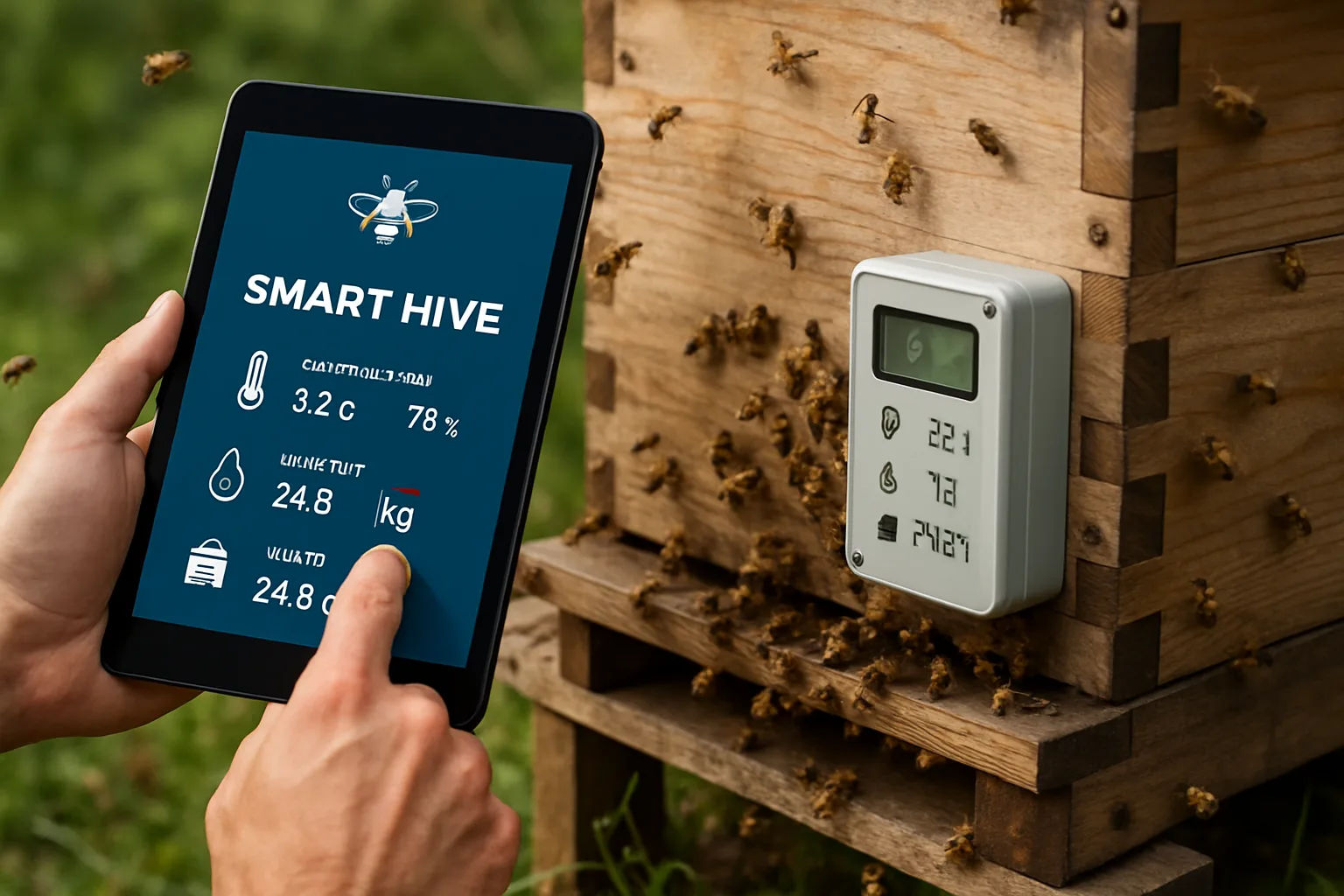
Sensors are only useful if their data reaches someone. Modern systems use mobile networks or low-power, long-range radio to send readings to a web dashboard. Small solar panels keep them running without grid power. In places where smartphones are not universal, SMS alerts allow a basic phone to receive the same warnings.
These are the foundations of what is often called the Internet of Things, or IoT, applied to the apiary. They are not intelligent on their own. They collect and transmit. The intelligence comes next.
AI in Beekeeping: Four Uses Taking Shape
1. Listening to the colony
A hive is never silent, and its sound changes with its condition. Researchers record hive audio and train machine learning models to recognise patterns linked to swarming or the absence of a queen. In controlled tests, some deep learning models have reported accuracy of up to about 99% in detecting swarming or queen loss from sound. Field conditions, with wind, rain, animals and equipment noise, are far less tidy than a test set, which is why results in the real world tend to be lower.
2. Predicting what comes next
Other models combine weight, temperature, weather and inspection records to forecast colony health. Detecting a problem that has already happened is easier than predicting one that has not. A recent review of the research found that models detecting current colony states often approached 95% accuracy, while models predicting colony loss in advance reached roughly 65% to 75%. Prediction is the more valuable goal, and it remains the harder one.
3. Seeing the entrance and the frame
Computer vision uses cameras at the hive entrance or over the frames. Software can count bees entering and leaving, estimate foraging activity and look for signs of pests and disease. This is attractive because visual data can show things that weight and sound cannot. It also needs more computing power and, usually, more cost.
4. Putting the intelligence on the hive
A growing area is Tiny Machine Learning, or TinyML, which runs compact models on small, low-power chips at the hive itself. This matters for remote apiaries. A device that analyses sound or weight locally needs far less data transmission and works even when the network is poor. It sends a short alert instead of a stream of raw data.
What This Looks Like in East Africa
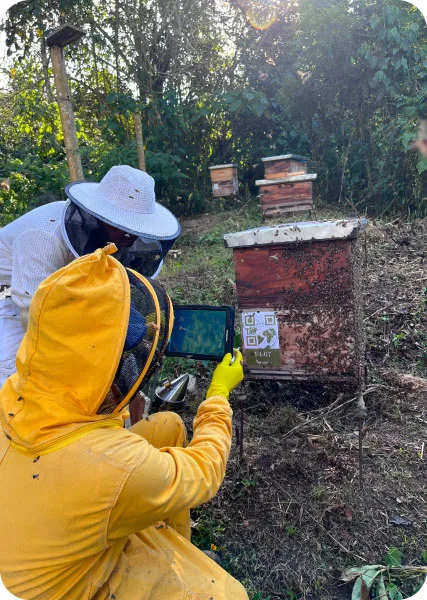
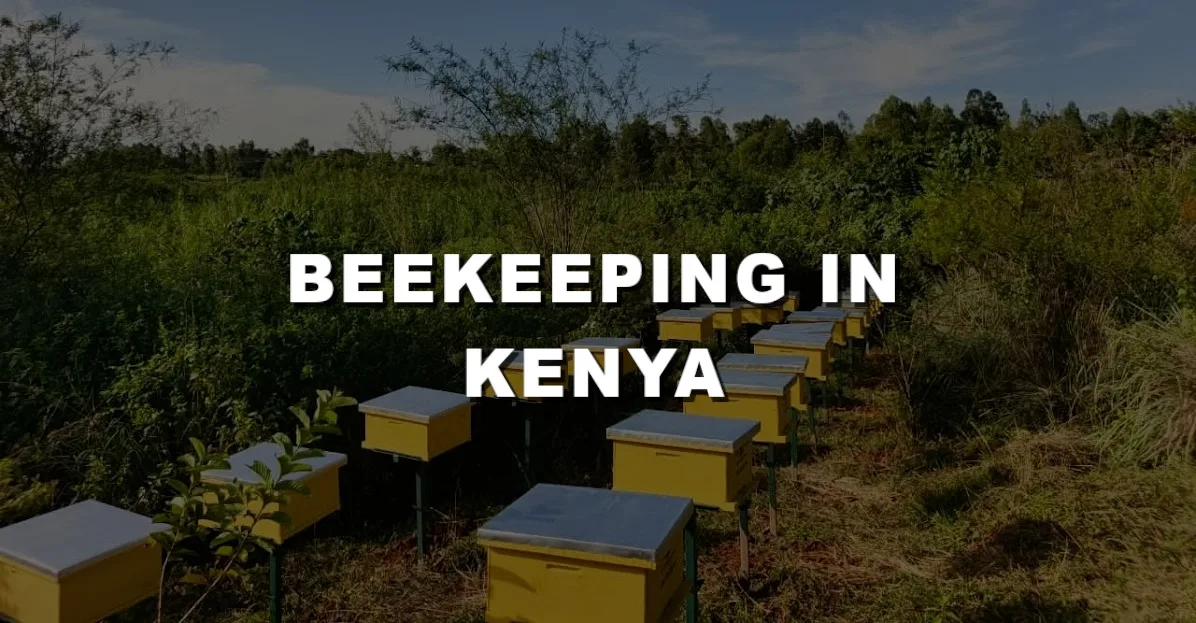
Kenyan researchers are building tools shaped by local needs. One university-led smart apiary project is being tested on six hives. It combines sensors for weight, sound, humidity and carbon dioxide with proximity sensors that detect honey badgers, monkeys and people near the hive. Data travels by long-range radio to a web dashboard, and farmers without smartphones can receive alerts by SMS.
Three features stand out. The design targets small-scale farmers and a low cost. It filters information, so a beekeeper may receive only predator alerts, harvest timing and colony activity. And it is described as an addition to training and experience, not a substitute. The developers also plan to offer the dashboard in local languages, which would widen access further.
These priorities match East African conditions, where theft, predators and distance between apiary and owner are often bigger concerns than the issues that dominate research elsewhere.
What the Evidence Supports, and What It Does Not
The enthusiasm is justified, but the limits are real.
Test results are not field results. Models trained and tested on clean recordings may perform worse on a working apiary.
Data is scarce. Reviews call for longer, multi-apiary datasets with confirmed outcomes. Much of the published work was done in other climates and with other bee populations, so models may need retraining for local bees and seasons.
False alarms cost trust. An alert system that cries wolf is soon ignored.
Cost and connectivity decide adoption. A sensor that cannot connect, or cannot be repaired locally, is of little use.
Data has an owner. Hive data can reveal apiary locations and production, so who stores it and who can see it matters.
Where the Technology Is Heading
Several directions look likely:
Sensor fusion. Systems that combine weight, sound, temperature and images tend to outperform any single signal.
Decision support. Instead of showing raw charts, systems will recommend an action, such as inspect, feed or harvest.
Shared datasets. Open, well-labelled data from many regions will help models work across different bees and climates.
Local design. Low-cost hardware, local languages and SMS-first alerts will decide whether the technology reaches smallholders.
The Takeaway
None of this is required to keep bees successfully. Good hives, a good site and regular inspections remain the foundation of every productive apiary. What the new technology offers is better timing and earlier warning, and its real value will depend on how well it is tested in the places where it is used.
Frequently Asked Questions
What is precision beekeeping?
Using sensors and data to monitor colonies continuously, so beekeepers can act at the right time instead of relying only on inspections.
How is AI used in beekeeping?
Mainly to analyse hive sound, predict colony health from sensor data, interpret images from the hive entrance and run small models directly on hive devices.
How accurate is hive AI?
It varies. Some models detect swarming or queen loss with very high accuracy in controlled tests, while predicting colony loss in advance is less accurate.
Does AI replace the beekeeper?
No. It flags what may need attention, and the beekeeper confirms and acts.
Is smart hive technology available in Kenya?
Local projects are being tested, including systems that use SMS alerts and predator detection. Wider availability will depend on cost and support.
Comments
0 comments