
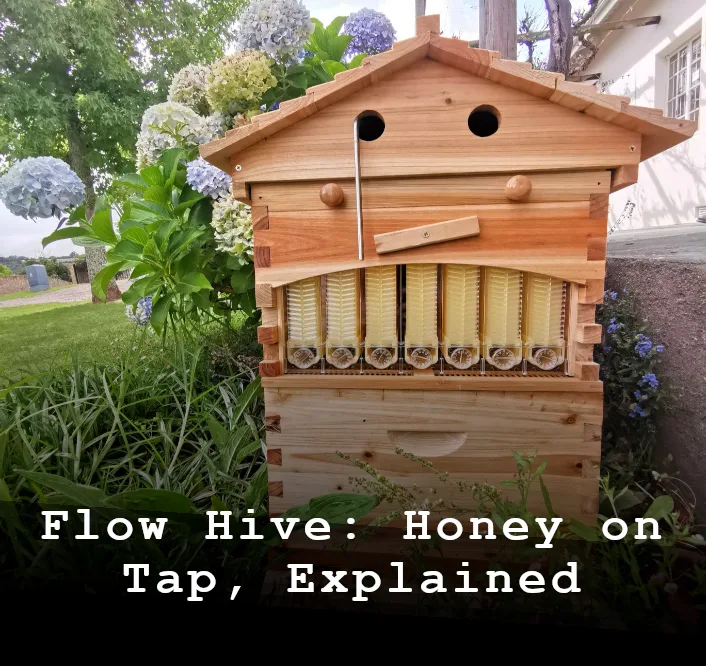

Few inventions in beekeeping have travelled as far as a plastic frame and a small key. The Flow Hive lets you harvest honey by turning a key, with the honey running through a tube into your jar while the bees carry on working.
For farm families and keepers weighing a Flow Hive in Kenya, the idea is simple and the appeal is clear. This article explains the technology, where a Flow Hive fits on a farm, why many beekeepers want one and what to check before you invest.
The Idea Behind the Flow Hive
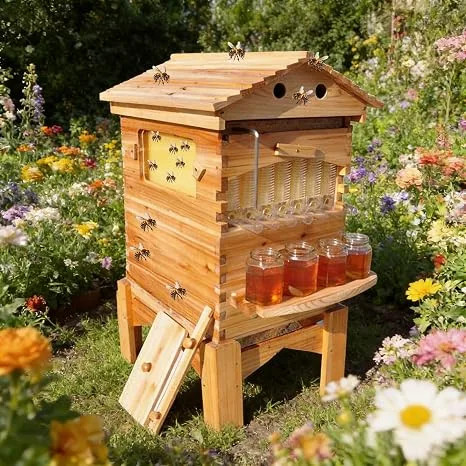
The Flow Hive was invented in Australia by a father and son, Stuart and Cedar Anderson, who spent about ten years developing it. They wanted a way to harvest honey that was gentler on the bees and easier on the beekeeper. When they launched it on a crowdfunding site in 2015, it passed its goal within minutes and became the platform’s most successful campaign at the time. A second version, the Flow Hive 2, followed in 2018.
How the Technology Works
The engineering is what makes it clever. A standard honey frame holds wax comb that you must uncap and spin in an extractor. A Flow Frame replaces that process.
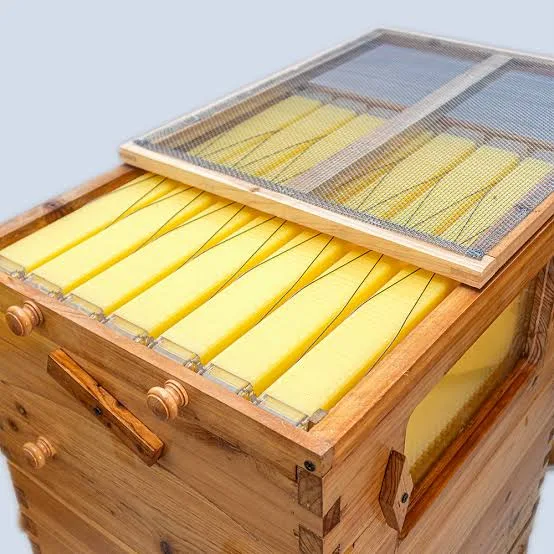
The frame holds partly formed cells. They are moulded from food-grade plastic and sized to fit Langstroth-style hive boxes.
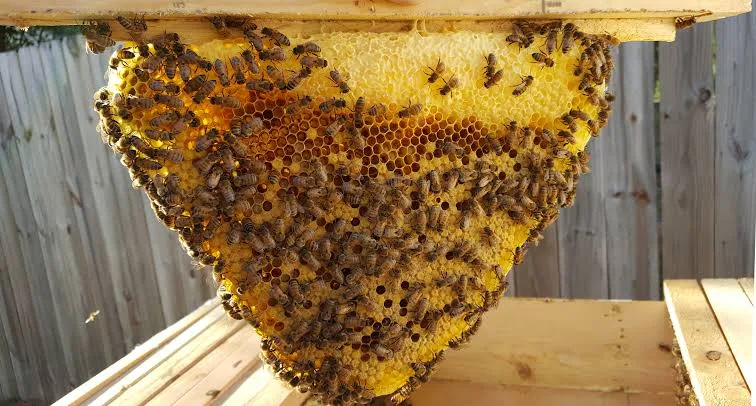
The bees finish the comb. They add their own wax, fill the cells with honey and cap them, just as they would on any frame.
You insert a key and turn it 90 degrees. The cells split vertically, which breaks the wax caps and opens channels through the comb.
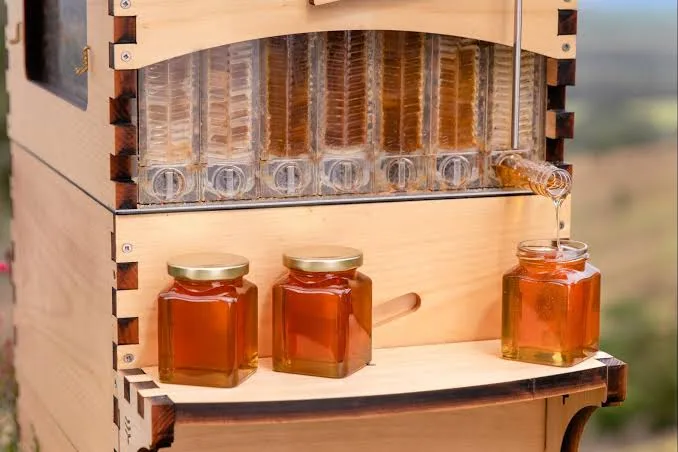
Gravity does the rest. The honey runs down the channels into a sealed trough, through a tube and into your jar.
You turn the key back. The cells close, and the bees clean up the comb and keep using it.
Because the wax stays in the hive, the honey comes out clear and needs little filtering. The bees remain on the surface of the comb and are only lightly disturbed. A good rule is to harvest when about 90% of the cells are capped, which you can check through the hive’s observation windows.
What the Flow Hive 2 Improved
The second version kept the same principle and refined the details. Improvements included adjustable legs, a harvest shelf for the jar and a roof designed to withstand strong winds.
Having a Flow Hive on Your Farm
A Flow Hive is usually a showpiece and a family supply as much as a production unit, so its position matters.
Near the homestead. A closed apiary close to the house keeps the hive within easy reach, and bees fly up and away without bothering people below.
Shade and shelter. Protect it from harsh afternoon sun and strong wind.
Water close by. Bees need a clean water source, especially in dry months.
Room at the harvest side. Leave space to set a jar beneath the tube and work comfortably.
A secure spot. A visible hive with honey in it deserves a safe site, away from busy paths.
Many farms keep one Flow Hive beside their regular hives, so the family has honey on demand while the main apiary produces for sale.
Why Many Beekeepers Want One
Honey for your own family
A Flow Hive puts fresh honey a few steps from your kitchen. You know where it came from, when it was harvested and that nothing was added. In a market where adulterated honey is a real concern, honey from your own hive carries a trust that is hard to buy.
Easy, tidy harvesting
Harvesting standard frames means lifting heavy boxes, uncapping comb, spinning and filtering. A Flow Hive replaces most of that with a key and a jar. It means less lifting, less mess and no extractor for that hive. For older beekeepers, or anyone who finds heavy work difficult, that is a real advantage.
Less disturbance for the bees
You do not need to open the hive to take honey or remove frames. The bees stay on the comb, which means a calmer colony and a calmer beekeeper.
Luxury and experience
There is a premium quality to watching honey flow straight from the hive into a glass jar. A Flow Hive makes a striking feature for a farm stay, a guest lodge, a restaurant garden or a family homestead. It turns honey from a product into an experience, and that can be valuable for gifting, hospitality and agritourism.
A window into the colony
The observation windows let you see how full the frames are without opening anything. That makes it a good teaching tool for beginners, children and visitors.
How a Flow Hive Works
A Flow Hive looks like a normal hive, with the same boxes stacked up. The difference is in the top box, where the honey is stored.
1. The bees do their usual work. The queen and the brood stay in the bottom box. In the top box, the bees finish building the comb, fill it with honey and seal each cell with wax.
2. You check if the honey is ready. Look through the small window at the back of the hive. When most of the cells (about nine out of ten) are sealed, the honey is ready.
3. You place a jar under the tube. The tube sits at the end of the frame, and the jar catches the honey.
4. You turn the key. You put the Flow Key into the frame and turn it. The cells inside the comb split open, and the honey runs down like water from a tap.
5. You turn the key back. When the honey stops flowing, you close the cells again. The bees clean up the comb and start filling it again.
The bees stay on the comb the whole time, and you never lift a frame out of the hive.
You still look after your bees. A Flow Hive only makes harvesting easier. You still check the queen, watch for pests and make sure the colony has water.
The Takeaway
The Flow Hive is best seen as a complement to a working apiary, not a shortcut around good beekeeping. It earns its place where ease, family honey, visitors and a touch of luxury matter, and where the beekeeper still brings knowledge, time and care.
Frequently Asked Questions
How does a Flow Hive work?
The bees fill special frames with honey. You turn a key to split the cells into channels, and the honey flows by gravity into a jar.
Does a Flow Hive need inspections?
Yes. It only changes how you harvest. You still need to check the colony, the queen and the hive regularly.
Can I use a Flow Hive with East African bees?
It was designed for European honeybees in Langstroth-style hives. Results depend on your location and colony, so start with one hive and learn from it.
Is a Flow Hive good for beginners?
It can be, since harvesting is simple and the windows help you learn. But a beginner still needs training in basic hive management.
Do I get beeswax from a Flow Hive?
Very little. The wax stays in the hive, so this method is about honey.
Is it worth it for a commercial apiary?
It can work as a showpiece or a family unit alongside standard hives. For large volumes, many beekeepers still prefer standard frames and an extractor.

Comments
0 comments