How to Identify Pure Raw Honey vs Processed Honey
Introduction
Honey has been trusted for centuries as one of nature’s most valued foods. But in today’s commercial world, not every golden jar on the shelf tells the same story. Some honey is left in its natural raw state, while others go through heavy processing that changes its structure, taste, and even nutritional value.
This raises a practical question for everyday consumers: how can you tell the difference between pure raw honey and processed honey?
The answer is simpler than most people expect once you know what to observe.
Why This Topic Matters Today
As demand for honey increases globally, so does the risk of adulteration and over-processing. Many products labeled as “pure honey” may be filtered, heated, or mixed with other sweeteners.
Understanding the difference helps people make informed choices about what they consume and builds awareness about how food processing affects natural products.
What Pure Raw Honey Really Is
Raw honey is honey in its most natural form. It is extracted from the hive with minimal processing, usually just straining to remove large particles like wax or bee debris.
It retains:
- Natural enzymes
- Pollen particles
- Antioxidants
- Flavor complexity influenced by flowers and region
Because of this, raw honey often appears slightly cloudy and may crystallize over time.
What Processed Honey Is
Processed honey is typically heated and heavily filtered to improve appearance and shelf stability.
This process can:
- Remove pollen and natural particles
- Delay crystallization
- Create a smoother, more uniform texture
- Reduce natural aroma and flavor depth
While it may look more visually appealing, it is often less natural in composition.
Simple Ways to Identify the Difference
1. Crystal Formation
Raw honey naturally crystallizes over time. Processed honey often stays liquid for much longer due to heating.
2. Aroma and Flavor Depth
Raw honey has a richer, more complex taste depending on floral sources. Processed honey tends to taste uniform and overly sweet.
3. Texture and Appearance
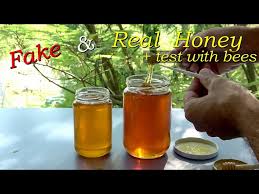
Raw honey may appear slightly cloudy or contain tiny particles. Processed honey is usually very clear and smooth.
4. Water Test (Simple Observation)
When placed in water, raw honey tends to sink and hold its shape longer, while overly diluted or processed honey may dissolve faster.
Real-World Perspective
Beekeepers often recognize raw honey not just by lab tests, but by experience. The behavior of honey over time—how it changes, thickens, or crystallizes—often tells more than appearance alone.
Consumers in local markets may also notice differences depending on season, floral source, and handling practices.
Common Misconceptions
Myth: Clear honey is always pure
Clarity is often a result of heavy filtering, not purity.
Myth: Crystallized honey is spoiled
Crystallization is a natural process and often a sign of raw honey.
Myth: All honey labeled “natural” is unprocessed
Marketing terms are not always regulated strictly, so interpretation matters.
Future Trends in Honey Authentication
With growing concerns about food authenticity, technologies like pollen analysis, traceability systems, and lab certification are becoming more common in honey supply chains.
This helps protect both consumers and ethical beekeepers who produce genuinely raw honey.
Conclusion
Identifying pure raw honey is less about complex testing and more about observation and understanding natural behavior. From crystallization patterns to aroma and texture, honey carries subtle clues about its journey from hive to jar.
The more you understand these differences, the easier it becomes to recognize honey in its true natural form.