
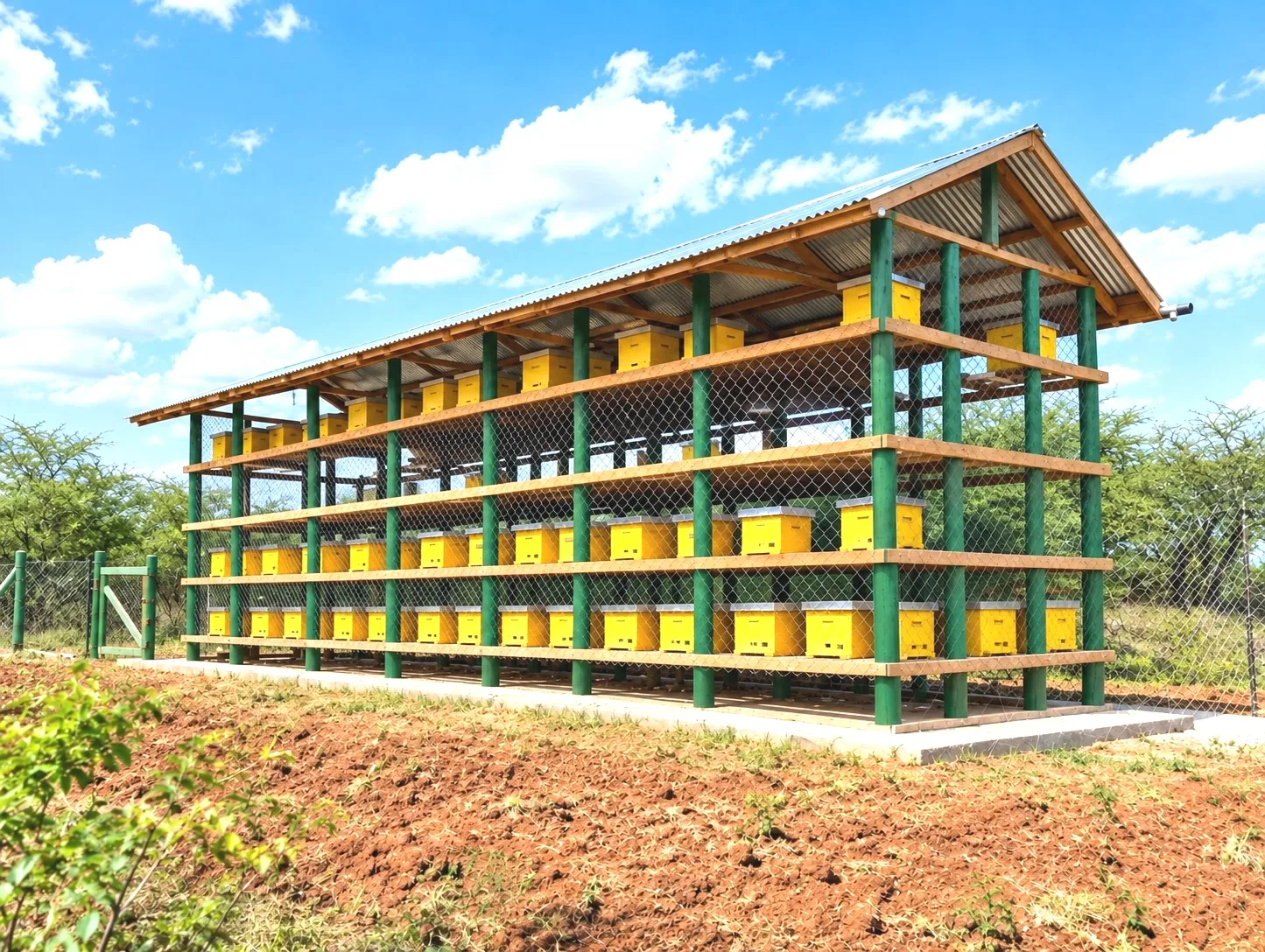
What if the difference between a beekeeping hobby and a profitable business isn't the number of hives you own, but what you do with them?
Many people begin beekeeping with a simple goal: put a few hives on their land, let the bees settle, harvest some honey and sell whatever is left after the household has taken its share.
There is nothing wrong with that.
But once you start thinking about beekeeping as an investment, the rules change.
Your hives are no longer simply something you own. They become productive assets. Every colony, every kilogram of honey, every hour of labour and every piece of equipment has to contribute to a system that can consistently produce, maintain quality and generate revenue.
Bees Don't Know Whether You're Running a Business
A bee colony does not care whether its owner has two hives or two hundred.
The colony still needs a suitable hive, a productive queen, adequate forage, protection from pests and diseases, appropriate management and timely intervention when conditions change.
Ignore those things and production can fall.
This is one of the biggest differences between hobby beekeeping and commercial beekeeping.
A hobbyist may say, "I'll check the hives next weekend."
A commercial beekeeper has to ask, "What happens to my production if I don't check them this week?"
That shift in thinking is important.
Commercial beekeeping treats labour, equipment, colony health, feeding where necessary, transport, harvesting and processing as part of the business — not as activities that happen only when there is free time.
One Hive Can Produce More Than Honey
Honey is usually the first product people think about when they hear "beekeeping."
But a productive apiary can offer several potential revenue streams.
Depending on the production system, market and local conditions, beekeepers can explore:
Honey
Beeswax
Propolis
Bee pollen
Bee venom
Queen bees and colonies
Pollination services
This changes the economics of the enterprise.
Instead of depending entirely on one product, a well-organised beekeeping operation can develop several products from the same apiary.
That does not mean every beekeeper should immediately start harvesting everything. Each bee product requires its own equipment, management practices, quality controls and market.
The important point is that the hive can be the starting point for a broader value chain.
The Real Asset Is the Colony
A hive is only a box.
The real productive asset is the colony living inside it.
A strong colony with a good queen, adequate forage and proper management can continue producing season after season. That makes beekeeping different from many agricultural activities where a crop is planted, harvested and started again from scratch.
But this also creates a responsibility.
A colony that is poorly managed can weaken, abscond, become diseased or produce very little. Buying more hives does not automatically solve that problem.
This is why simply counting hives can be misleading.
Two apiaries can have the same number of hives and completely different levels of productivity.
The difference may be found in queen quality, colony strength, forage, hive design, management practices, harvesting discipline and the experience of the beekeeper.
Where Many Beekeeping Businesses Go Wrong
The biggest mistake is treating beekeeping as passive income.
It isn't.
Bees are living organisms, and agricultural businesses built around living organisms require management.
A weak queen can affect colony development.
Poor pest and disease management can affect colony health.
Harvesting at the wrong time can affect product quality.
Poor storage can reduce the value of an otherwise good harvest.
And producing a quality product means very little if there is no reliable market for it.
This is why commercial beekeeping begins long before the honey reaches the market.
From "How Much Honey Can I Get?" to "How Much Value Can I Create?"
A business-minded beekeeper asks different questions.
Instead of asking only:
"How much honey can my hives produce?"
they start asking:
"How much does it cost to produce each kilogram?"
"What percentage of my colonies are productive?"
"How can I improve colony strength?"
"What other products can my apiary produce?"
"How will I maintain consistent quality?"
"Who will buy my products?"
"Can I trace each batch back to its source?"
These questions turn beekeeping from a seasonal activity into a business system.
Quality Can Be Worth More Than Quantity
Producing more is not always the same as creating more value.
A beekeeper may produce a large quantity of honey but lose value through poor harvesting, contamination, improper storage, inconsistent packaging or weak market access.
Another producer may focus on cleaner production, proper handling, traceability, quality testing and professional packaging.
The two products may come from the same region, but they do not necessarily reach the market with the same commercial value.
This is where value addition becomes important.
Instead of simply selling raw products at the farm gate, beekeepers can develop systems for cleaning, processing, packaging, branding and connecting products with markets that value quality.
Commercial Beekeeping Requires a System
A serious beekeeping enterprise needs more than bees and hives.
It needs:
Production — healthy colonies and suitable apiary locations.
Management — regular inspection, queen management and colony-strength monitoring.
Harvesting — appropriate timing and careful handling of bee products.
Processing — hygienic handling and quality control.
Record keeping — knowing what was produced, when it was harvested and where it came from.
Marketing — identifying buyers before production scales beyond the local market.
Value addition — finding ways to turn raw bee products into higher-value products where the market supports it.
When these pieces work together, an apiary becomes more than a collection of hives. It becomes a production system.
So, How Many Hives Do You Need?
There is no universal number.
Starting with a manageable number of colonies and learning how to operate them properly can be more useful than purchasing a large number of hives that cannot be adequately managed.
Scaling should follow capacity.
As management systems improve, the beekeeper can expand colonies, equipment, harvesting capacity, processing and market access together.
That is how an apiary grows into an enterprise.
The Opportunity for African Beekeepers
Africa has significant potential in beekeeping, not only because of its bee populations but also because of the diversity of flowering plants and the growing interest in natural and value-added products.
The opportunity goes beyond producing honey for the local market.
With appropriate systems, beekeepers can participate in wider value chains involving honey, beeswax, pollen, propolis, bee venom, queens, pollination and other bee-related products.
But accessing higher-value markets requires more than production.
It requires consistency.
Buyers want to know what they are purchasing, where it came from, how it was produced and whether its quality can be maintained from one batch to the next.
That is where professional beekeeping makes the difference.
From Hobby to Investment
The journey from hobbyist to commercial beekeeper does not happen simply by buying more hives.
It happens when the way you manage those hives changes.
You begin measuring costs.
You monitor colony performance.
You protect bee health.
You improve harvesting and handling.
You keep records.
You develop markets.
You look beyond honey.
And you build systems that can continue working as the number of colonies grows.
The question, therefore, isn't simply:
"Can beekeeping make money?"
The more useful question is:
"What kind of beekeeping business am I building?"
A few hives can provide honey for a household.
A professionally managed apiary can become a productive agricultural enterprise.
The difference is not just the bees.
It's the system built around them.
Comments
0 comments