Something is interesting about keeping bees. You place a hive on your farm, give the bees a good environment, and, when everything is going well, they pretty much take care of themselves.
But not every season is the same.
Sometimes flowers are everywhere and bees are bringing in nectar and pollen throughout the day. Then the weather changes, flowering plants become scarce, and suddenly the colony has fewer food sources.
This is where bee feeding can be helpful.
But feeding isn't about simply pouring sugar water into a hive whenever you feel like it. There should be a reason for feeding, and knowing when and how to do it matters.
So, when should you feed bees, what can you use, and can you make your own feeder? Let's get into it.
Why Do We Feed Bees?
The first question should always be: Why does this colony need feeding?
One of the main reasons is lack of natural food. When flowering plants are scarce, bees may struggle to collect enough nectar to maintain the colony. If their food stores are running low, supplemental feeding can help them through that period.
Feeding can also help when establishing a new colony. A new colony needs food to build comb, raise brood and grow. If there isn't enough nectar coming in, feeding can give the colony some support while it gets established.
Another situation is after honey harvesting. Remember, the honey you harvest is food that the bees would normally use too. Always leave adequate stores for the colony, and if natural forage isn't enough, feeding may be necessary.
The goal isn't to make bees dependent on the beekeeper. It is simply to help them through periods when natural food isn't enough.
When Should You Feed Bees?
One mistake beginners sometimes make is feeding simply because they have sugar available.
Before feeding, take a look around the apiary.
Are plants flowering?
Are bees bringing in nectar and pollen?
Does the colony have enough food stored?
If natural forage is good and the colony has enough stores, there may be no need to feed.
You may consider feeding when:
Natural nectar sources are scarce.
A colony has low food stores.
A new colony needs support.
Bad weather has limited foraging.
The colony needs additional food after honey harvesting.
You need to support colony activity before a reliable nectar flow, where appropriate.
But don't overdo it. Excess feed can create problems such as attracting pests and encouraging robbing.
Don't Use Just Any Sweet Material
You may come across suggestions to use things like brown sugar, molasses or other sweet materials because they are easily available.
For basic bee feeding, ordinary white granulated sugar is the safer and simpler choice.
Also, be careful with honey.
It might seem strange because bees naturally eat honey, but honey from an unknown source can introduce diseases into your apiary. For routine supplemental feeding, clean sugar syrup is a much simpler option.
Can You Use Local Materials?
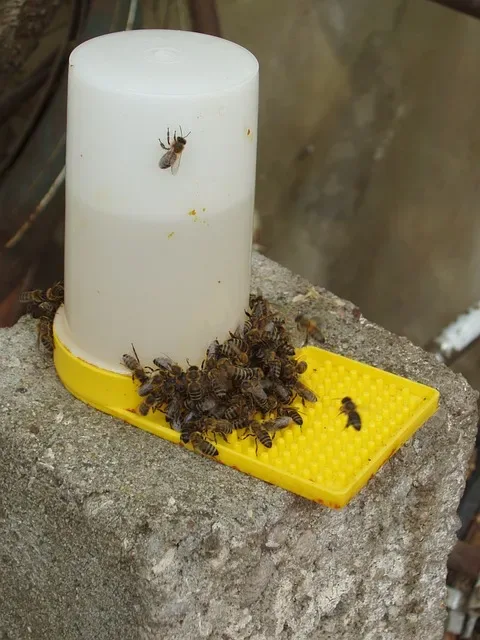
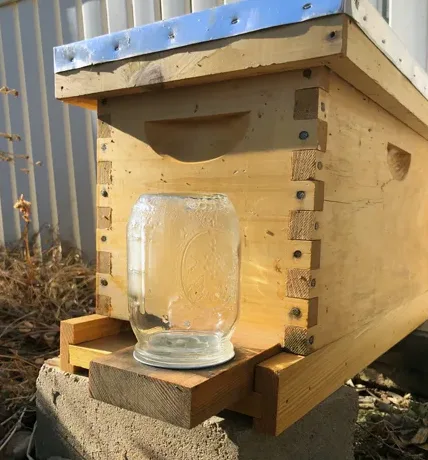
Yes. You don't always need to buy an expensive commercial feeder.
A clean food-grade plastic container, bottle or small container can be adapted for feeding, provided bees can access the syrup safely without drowning.
The most important thing is cleanliness and safety.
Never use a container that previously held chemicals, pesticides, fuel or anything else that could harm the bees.
An Easy Feeder Improvisation
Let's say you don't have a commercial feeder but need to give a colony some syrup.
A clean food-grade plastic container can be adapted. The bees should be able to reach the syrup, but they shouldn't have an open pool where they can fall in.
You can use a suitable rough surface or floating material that gives the bees somewhere to stand while feeding.
Before putting it in the hive, test it.
Ask yourself:
Could the bees fall into the syrup?
If yes, improve the design first.
A simple, safe feeder is much better than an expensive feeder that puts your bees at risk of drowning.
Be Careful About Robbing
This is something beginners shouldn't overlook.
The smell of sugar syrup can attract bees from other colonies. If syrup is spilled around the hive, you may accidentally encourage robbing.
Instead of helping one colony, you could end up creating a fight between colonies.
When feeding:
Avoid spilling syrup around the hive.
Keep the feeder secure.
Don't leave exposed syrup around the apiary.
Keep the feeding area clean.
Monitor the colony after feeding.
If you notice unusual fighting around the hive entrance, take a closer look.
Don't Overfeed
More feed doesn't automatically mean a healthier colony.
The colony still needs a balance between food storage, brood rearing, available space and natural forage.
So rather than following a fixed amount every time, observe the colony.
Check its food stores.
Look at the bee population.
Look at the available forage.
Then decide whether feeding is actually necessary.
Feeding Is Support, Not a Replacement for Good Beekeeping
This is probably the most important point.
If your bees constantly need feeding because there is little for them to forage on, the bigger question should be:
What can I improve around the apiary?
Planting flowering plants, protecting natural vegetation and maintaining different sources of forage can give bees a more reliable food environment.
A good apiary isn't just about the boxes.
It is also about what surrounds those boxes — trees, shrubs, crops and other flowering plants.
So while feeding can help a colony through a difficult period, good forage management should remain part of the bigger picture.
Final Thoughts
Bee feeding looks simple until you actually start doing it.
Yes, you can mix sugar and water. But knowing when to feed, why you are feeding, how much to provide and how to avoid problems such as robbing or drowning is what really matters.
Before reaching for the sugar bag, take a moment to observe your bees.
Are they bringing in pollen?
Are there flowers around?
Do they have enough food stores?
Is the colony strong?
The more you observe, the better you understand what your bees actually need.
Comments
0 comments