A well-fed colony stays, grows and produces. The best bee plants in Kenya are a mix of fast-flowering crops and shrubs for quick results, and trees for long-term forage, chosen so that something is always in bloom. Plant around your apiary with that in mind, and you give your bees less reason to leave and more reason to fill your hives.
This guide covers what to plant, how long each takes to flower, and how to plan it.
Why Plant Around Your Apiary?
Bees that find food nearby spend less energy travelling and have more to store.
Flowers in the dry months keep colonies from running short and leaving.
Trees give shade, and windbreaks for the hives.
Better forage means more honey, and healthier colonies for venom and propolis too.
It is a lasting investment. A tree planted today feeds bees for decades.
Quick Results: Plants That Flower in Weeks or Months
These help your bees in the first season, while the trees grow.
Plant | Notes |
|---|---|
Sunflower | A major nectar and pollen source that flowers within a few months |
Rape and mustard | Quick-flowering, and you can sell the crop too |
Vetch and clover | Good nectar, and they improve the soil |
Cleome (spider plant) | A common local vegetable that flowers freely and feeds bees |
Pumpkins and other vegetables | Their flowers give pollen and nectar, and bees pollinate your crop |
Maize | Its flowers are an important source of pollen |
Bidens (blackjack) | Flowers nearly all year, and one of the most reliable pollen plants in many areas |
Herbs such as basil, coriander and lavender | Easy to grow near the hives |
Medium-Term: Shrubs and Small Trees (About 1 to 3 Years)
Calliandra. The favourite of many Kenyan beekeepers. This fast-growing shrub can start flowering in its first year, produces nectar in the dry months, and gives shade, a windbreak and fodder for animals.
Gliricidia. Flowers in the dry season, gives shade and soil fertility, and its leaves can feed livestock.
Acacia mellifera (hook thorn). A low, hardy shrub that flowers before the rains, which helps fill a gap, and suits drier areas.
Long-Term: Trees That Reward You for Decades
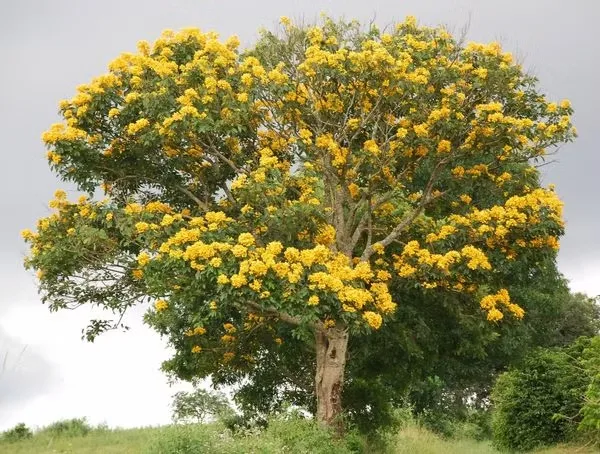
Plant them now. They take time, but they carry your apiary for years.
Tree | Notes |
|---|---|
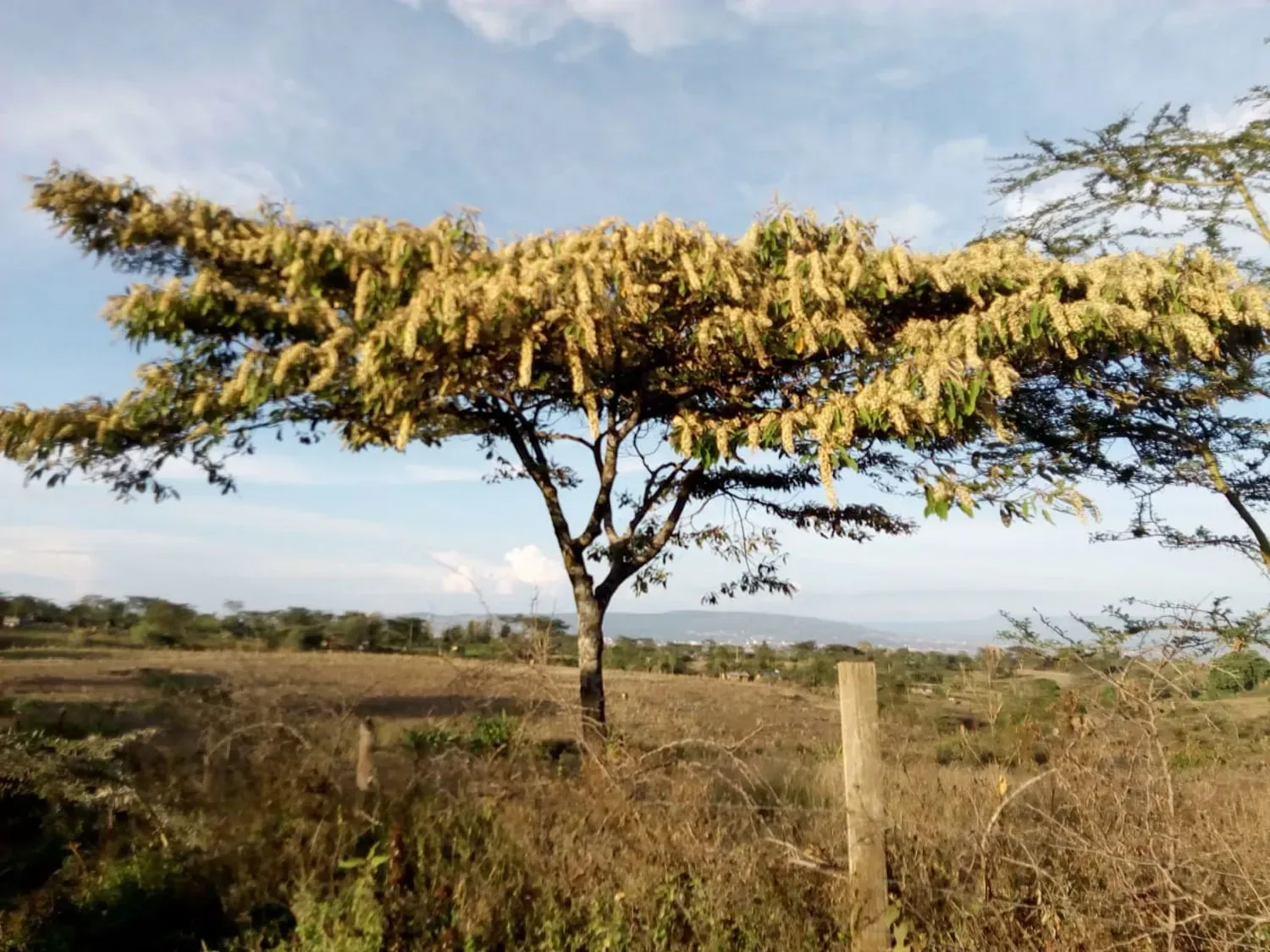
Grevillea robusta (Mukima, silky oak) | Very common, produces plenty of nectar and pollen, and flowers early in the year |
Croton megalocarpus (Mukinduri) | Flowers around March and April, can produce abundant honey, matures in five to seven years, and suits boundaries |
Croton macrostachyus | Flowering varies by region, with some areas in June and July |
Cordia africana | Flowers around April to June, and starts flowering after about three to five years |
Markhamia lutea | Flowers for much of the year, with seasons that vary by region |
Acacia species | Valuable nectar and pollen, though trees take several years to flower |
Jacaranda, Dombeya and Eucalyptus | Good nectar sources, though plant Eucalyptus sparingly, since it uses a lot of water |
Fruit and cash crops also feed bees: citrus, mango, macadamia, papaya, passion fruit, bananas and coffee all flower and give your bees food, and your bees can improve your harvest through pollination.
Plan a Year of Flowers
Bees need food in every month, so aim for overlap. Here is a rough guide for much of central Kenya. Flowering times vary with altitude and rainfall, so watch the plants in your own area.
Months | What may be flowering |
|---|---|
January to March | Grevillea |
March to April | Croton megalocarpus |
April to June | Cordia africana |
June to September | Calliandra, Croton macrostachyus (in some areas) |
October to December | Sunflower, rape and other crops planted with the rains, Markhamia in some areas |
Before the rains | Acacia mellifera |
Write down what you see flowering, month by month, around your apiary. After a season or two, you will have your own flowering calendar, and you will see exactly where the gaps are. Then plant for the gaps.
How to Plant Around Your Apiary
Plant a mix, so something flowers in every season, especially the dry months.
Plant in groups, not single trees. Bees prefer clumps of the same plant.
Plant close to the hives, so bees do not waste energy, but keep the area in front of each hive entrance clear, so they have an open flight path.
Use trees for shade and wind protection, on the sides that need it.
Water young plants until they are established.
Choose well-known, locally suited species, and avoid invasive plants. Ask your county agriculture or forestry office if you are unsure.
Avoid spraying chemicals on flowering plants, and talk to your neighbours about spraying times.
Start small and add every season. A few trees each year add up.
Do You Need to Plant Everything?
No. Many farms already have useful trees and crops. Begin by noticing what is already flowering around you, then add what is missing. Planting a few of the right trees is better than planting many of the wrong ones.
Comments
0 comments