
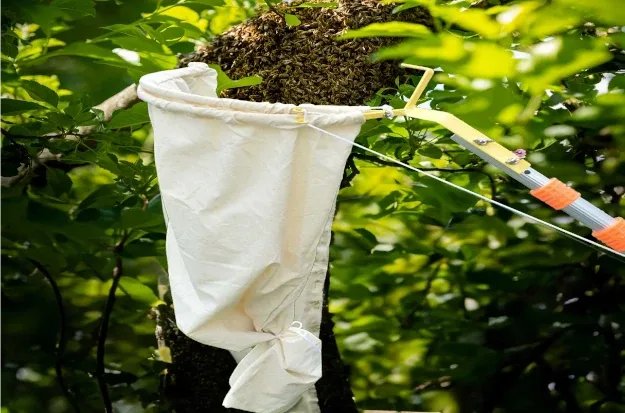

To catch a swarm, find the cluster of bees (usually hanging from a branch), place a box or bucket beneath it, guide the bees in, wait until evening for the stragglers, and move them to a hive. Even better, set catcher boxes so swarms come to you. This guide explains how to catch a swarm, why bees swarm in the first place, and how to reduce swarming in your own hives.
Why Do Bees Swarm?
Swarming is how bee colonies reproduce. It is natural, and it usually means your colony is strong. When a hive gets crowded and food is plentiful, the bees raise new queens. Then the old queen leaves with a large part of the colony, often more than half of the bees, to look for a new home. The rest stay behind with a new queen.
For you, a swarm is both a loss and an opportunity. You lose bees and honey from the parent colony, but every swarm you catch is a free colony. A Langstroth hive costs KSh 4,500 with us, and a caught swarm fills it at no cost.
Swarming tends to happen when flowers start to bloom, often at the beginning of a good season. African bees also swarm readily, so it is worth being ready.
Warning Signs a Colony Is About to Swarm
Look for these at inspection time:
Queen cells, peanut-shaped cells usually on the bottom or sides of the frames. Five to twenty is a strong sign.
A crowded hive, with the boxes full of bees, and little space to store food or lay eggs
Bees hanging outside the entrance in a cluster, especially on warm days
A slimmer queen and less egg laying
Honey and brood packed in tight, with few empty cells
Once the queen cells are capped, a swarm can leave within days. That is why regular inspections matter.
How to Prevent Swarming
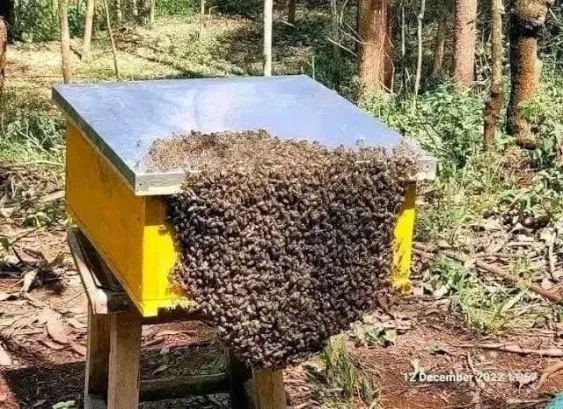
You cannot stop swarming completely, but you can cut it down:
Give space early. The most important step. When the top box(super) is about 80% full of bees, add another box. For a top bar hive, add more bars.
Inspect often in the swarming season, about every one to two weeks, and look for queen cells.
Split strong colonies. Dividing a crowded colony gives the bees a “new home” and gives you a new hive.
Replace old queens, because younger queens swarm less.
Harvest on time, so honey does not clog the hive.
Give shade and airflow, so the hive does not overheat.
Cutting out queen cells alone seldom works, because bees can start new ones. Space and splitting are far more reliable.
How to Catch a Swarm: Step by Step
Swarms are usually calm because the bees are full of honey and have no home to defend, but African bees can still be defensive, so always wear full protective gear.
What you need: a swarm box (also called a nuc box) or a bucket with a lid, a sheet, a bee brush, a veil and suit, and a pole or secateurs for high branches.
Find the cluster. Swarms often hang from a branch, a fence or the side of a building.
Place the box or bucket directly beneath it.
Shake or brush the bees in. A sharp, firm shake of the branch usually drops most of them. Be gentle, and try not to crush any.
Check for the queen. If you have caught her, the bees will fan at the entrance, and the rest will follow.
Leave the box nearby until evening, so the stragglers can join.
Move the box at dusk, when all the bees are inside. Close the entrance.
Install them in a hive. Place the bees into a prepared hive with frames or bars, and put the lid on.
Let them settle. Leave them alone for a week or two, give water, and feed with sugar syrup if they seem short of food.
Do not climb high ladders or trees alone, and do not try to catch swarms in dangerous places. Call an experienced beekeeper instead.
Catcher Boxes: Catch Swarms While You Sleep
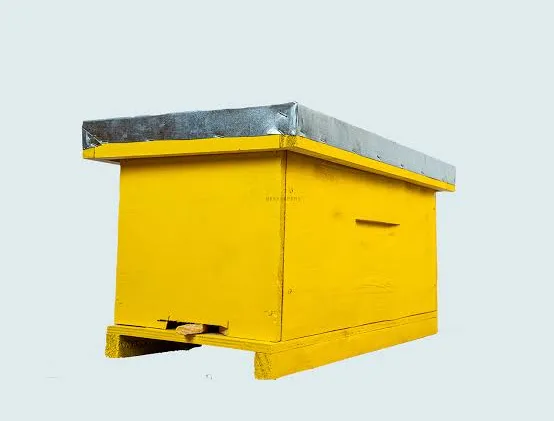
You do not have to wait and watch. A catcher box is a small, five-frame box placed where swarms are likely to pass, and it works best on large farms or in forests.
How it works:
Prepare several catcher boxes with five frames, with some old comb or a little melted beeswax and lemongrass to make it smell like home.
Place them in different parts of your farm or forest, hung in trees or placed on stands.
Keep your main hives in the apiary, where you can watch over them. This also protects them from theft, because only the cheaper catcher boxes are out in the forest.
Check them after one to two weeks. If bees have moved in, collect the box.
Move the frames into a main hive. In the apiary, put the five frames, with their bees, into a prepared hive, and place five empty frames from that hive into the catcher box.
Return the catcher box to the forest to catch the next swarm.
Tips when moving bees:
Move boxes in the evening, with the entrance closed.
Keep the frames in the same order when you transfer them.
A few days later, look for eggs to confirm the queen is present.
If a box is still empty after a week or two, move it to a different spot.
Where to Place Hives and Catcher Boxes
Swarms look for a safe, dry, sheltered home. To raise your chances:
Hang hives in trees that are likely to attract bees, such as flowering trees near water.
Choose open, shaded spots that are quiet and away from paths.
Place stands across the farm, with hives or boxes on top, in several areas, not just in one place.
Mix heights and locations, because swarms choose differently.
Keep them clean and dry, with a little wax or lemongrass scent.
The more places you cover, the more chances you have.
After You Catch a Swarm
Give them food and water for the first week or two.
Leave them undisturbed, because disturbed swarms can abscond.
Check for eggs and brood after about a week.
Watch for ants and other pests while the colony settles.
Soon, you have a new, productive colony that cost you nothing to buy.
Quick Questions
How do you catch a swarm of bees?
Place a box or bucket under the cluster, shake or brush the bees in, wait until evening, and move them to a hive.
Are swarms dangerous?
Swarms are usually calm, but African bees can be defensive, so always wear protective gear.
Can I stop my bees from swarming?
You can reduce it by adding space, splitting strong colonies and inspecting often.
What is a catcher box?
A small five-frame box set out to attract swarms, which you collect and transfer to a main hive.
How long should I leave a catcher box?
Check after one to two weeks. If it is empty, try a new location.
Does a swarm leave because something is wrong?
Usually not. It is natural reproduction, though bees can also abscond when stressed.
A swarm is not bees leaving you. It is bees offering you a new hive.
Wear full protective gear whenever you handle bees. If you know you react badly to stings, speak to a health professional first.



Comments
0 comments