
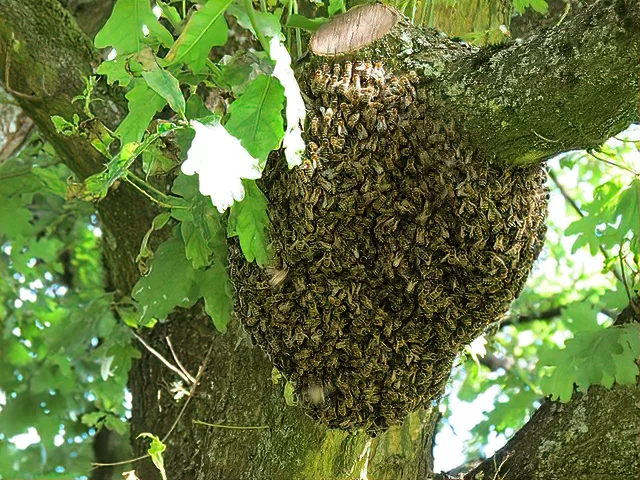

Bees abscond when staying becomes harder than leaving. The usual triggers are hunger, thirst, heat, pests or too much disturbance, and when you fix those, most colonies stay. This guide explains why bees abscond, the warning signs to watch for, and eight simple ways to keep your colonies in their hives.
Absconding can feel like a personal loss, but it is not a sign that you failed. African honey bees are programmed to move when conditions turn bad. Once you understand why, you can make your hives a place worth staying.
Swarming, Absconding and Migration: What’s the Difference?
What happens | Why | |
|---|---|---|
Swarming | Part of a strong colony leaves with the old queen, and the rest stay | Natural reproduction |
Absconding | The whole colony leaves, often abandoning brood and honey | Stress: food, water, pests, heat or disturbance |
Migration | Colonies move with the seasons to follow flowers | Seasonal forage and weather |
Swarming is good news and an opportunity. Absconding is the one to prevent.
Why Bees Abscond
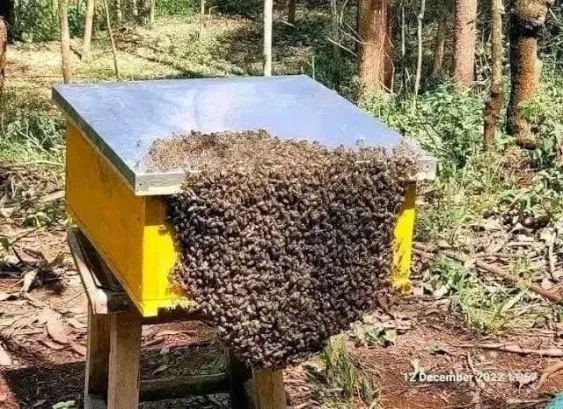
1. Not enough food. In a long dry spell, when few plants flower, colonies cut back on rearing brood and send scouts to look for better places. This is the most common reason in Africa.
2. Not enough water. Bees need water to cool the hive and feed their young. When it is scarce, they may move on.
3. Too much heat. A hive in full sun, with no shade, can overheat. Bees then leave for a cooler home.
4. Pests and predators. Ants, wax moths, hive beetles and honey badgers all stress a colony. Ants are among the biggest causes of sudden departures.
5. Too much disturbance. Frequent opening, heavy smoke, noise, or rough harvesting can push a colony over the edge. Taking all the honey leaves bees with nothing to live on.
6. Fire and smoke. Bush fires, or smoke nearby, can drive a colony out and even destroy the hive.
7. Poor hive conditions. A leaking roof, a damp or draughty hive, or a weak colony with no queen are not good places to stay.
8. Chemicals. Pesticides and other agrochemicals near the apiary can stress bees and make them leave.
Warning Signs a Colony May Leave
Brood rearing slows down, with fewer eggs and young bees
The colony shrinks, and fewer bees fly out
Bees cluster on the outside of the hive, or near the entrance
Ants, beetles or moths are moving in
The hive is nearly empty of honey and pollen
The area has had no flowers or water for a while
If you see two or three of these, act the same day.
How to Keep Your Bees: 8 Simple Steps
1. Give water. Place a shallow dish with stones or floating sticks near the apiary, and refill it often. In the hot, dry season, this alone can reduce colony losses.
2. Add shade. Put hives under trees or a simple roof so they stay cool, while still getting some morning sun.
3. Feed when food is short. In a dearth, give sugar syrup inside the hive, and avoid spilling it, which can start robbing. Feed only when needed, and never mix syrup-fed stores into honey you sell.
4. Plant for the dry months. Flowering trees and shrubs that bloom when little else does give bees a reason to stay. Your local flowering calendar will tell you where the gaps are.
5. Keep pests out. Raise hives on stands with oil or grease on the legs, clear the grass around them, and keep hives tight with no cracks. Check regularly for wax moth and beetles.
6. Be gentle. Inspect only when needed, use a little smoke, and work calmly. Leave some honey for the bees at harvest, and never strip a hive bare.
7. Protect against fire. In the dry season, clear a firebreak about three metres wide around your apiary, and keep dry grass away from the hives.
8. Keep hives in good repair. Fix leaks, keep the roof sound, and make sure the hive is dry and ventilated.
Also keep hives away from fields that are sprayed with chemicals, and talk to your neighbours about spraying times.
Moving Hives with the Seasons
Some beekeepers practise migratory beekeeping, moving hives to areas with better forage during dry spells and back again afterward. Move them at night, with the entrances closed and the frames secured, and settle them in a quiet, shaded spot with water nearby. It takes planning, but it keeps colonies fed and strong.
What If a Colony Has Already Left?
Look nearby. Absconded colonies often settle within a short distance, perhaps in a nearby tree.
Catch them if you find them, the same way you would catch a swarm.
Find the cause. Check for ants, empty stores, heat or recent disturbance.
Clean and repair the hive, then bait it again with a little wax and lemongrass.
Write it down. Records show you which hives, sites and seasons are most at risk.
What Does Absconding Cost?
One colony that leaves takes its honey harvest with it, roughly KSh 20,000 a year in honey from a good hive. (Estimate: 25 kg at KSh 800 per kg.) Saving even a few colonies a year pays for the water dish, shade and stands many times over.
Quick Questions
Why do bees abscond?
Mostly because of hunger, thirst, heat, pests or disturbance.
Is absconding the same as swarming?
No. Swarming is natural reproduction from a strong colony. Absconding is the whole colony leaving under stress.
When do bees abscond most?
In long dry spells and when pests move in.
Can I stop it completely?
No, but you can reduce it a lot with water, shade, food, pest control and gentle handling.
Will absconded bees come back?
Usually not, but you can bait the empty hive and catch a new colony.
Do top bar and Langstroth hives abscond equally?
Any hive can lose a colony. Strong, well-managed colonies in good hives are the most likely to stay.
Give bees water, shade, food and calm hands, and most of them will stay.

Comments
0 comments