Picture this. You inspect a hive you have been proud of for months. The bees are gone. The combs are a mess of silky webs, black specks and fat white caterpillars. All that work and all that honey, finished.
No big animal did this. Two tiny pests are behind most of these stories around the world: the wax moth and the varroa mite. The good news is that you can stop both, and in Kenya the plan is simpler than you might think.
Pest one: the wax moth
This is the one to watch in Kenya.
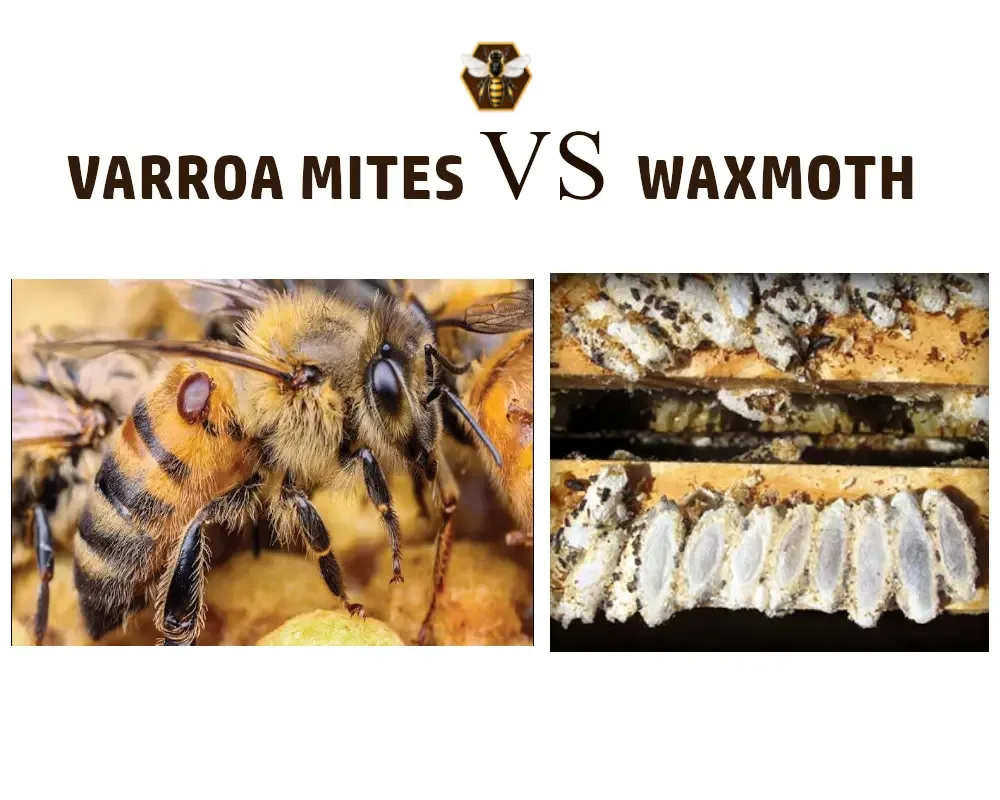
What it does. The adult moth lays eggs near the combs. The eggs hatch into caterpillars, and the caterpillars are the real trouble. They eat the wax, and they ruin brood and honey cells, and in bad cases they can cause a total loss of hive productivity and make the bees abscond. The greater wax moth caterpillar grows to about 30 mm long. kalro
Who it picks on. Weak colonies are the main targets, such as those with few workers, those that are starving, diseased or queenless, or hit by pesticide poisoning. It also does better in warm, low-altitude areas than in cold highlands. A strong colony defends itself. A weak one gets eaten. kalro
Signs to look for:
White silk trails moving under the cappings
Black specks of droppings in the comb
Fast-moving caterpillars in tunnels
White cocoons stuck to hive walls and gaps
Webbing across the combs
How to prevent it
The Kenya Agricultural and Livestock Research Organisation (KALRO) gives practical advice, and it is mostly common sense:
Keep colonies strong and healthy. kalro
Don't give a colony more comb than the bees can cover. Add combs gradually as the bee numbers grow. kalro
Never leave spare combs or empty hives lying around the apiary, because they become breeding places. Store them in a sealed container or room. kalro
Clear debris from the bottom boards regularly, because larvae feed on it. kalro
Inspect often, especially weak or queenless colonies. kalro
For a light infestation, scrape out the larvae with your hive tool. Heavily infested combs should be burned. kalro
The local trap: a bottle, a banana and a little sugar
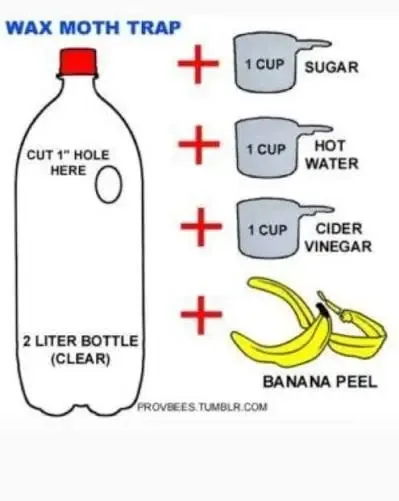
This is the "mixture" you may have heard about, and it is from KALRO. Moths love fermenting smells, so you give them one.
What you need: a 2-litre bottle (a clear one is best so you can see what is inside), string or wire, and the mixture.
The mixture:
Equal parts of water, sugar (or honey), and yeast or vinegar kalro
A ripe banana peel, left whole kalro
How to make and use it:
Cut a hole about an inch wide near the top of the bottle.
Pour in the mixture and drop in the banana peel.
Hang the bottle slightly above the height of your hives. One bottle per tree that holds several hives is enough. kalro
Check it regularly. When it fills with moths, empty it and refill it. kalro
It costs almost nothing and uses things you already have at home.
Pest two: the varroa mite
Varroa is a tiny red-brown mite that clings to bees and feeds on them. Around the world it has wiped out huge numbers of colonies, mostly in Europe and the USA.
Is it in Kenya? Yes. It was first found here in early 2009. Surveys showed it throughout Kenya except in the remote north. So it is here, but it has not been the disaster it was elsewhere. In Kenya, the mite's presence alone does not appear to harm colony size. www.apidologie.org +2
Why? African bees seem to handle mites better than European bees, and one likely reason is that they are good at spotting and removing infested brood. Researchers also noted that chemical control is not needed for Kenyan bees at this time. apidologieseku
That is good news, but "not a problem yet" is not "never a problem". These findings come from surveys done some years ago, and pests change. Prevention is cheaper than cure.
How to stay ahead of varroa
Keep strong colonies. Strong bees clean out the mites best.
Protect their food. Researchers recommend protecting nesting habitat and a good variety of flowering plants. Plant bee-friendly flowers near your apiary. entomologytoday
Check now and then. A simple test is to shake or wash about 300 bees in alcohol and count the mites that fall off. If you see many, ask your county beekeeping officer or KALRO for advice.
Be careful about new bees and equipment. Don't bring in colonies or used hive parts from unknown places.
Don't reach for chemicals first. They are not needed for now, and residues can end up in your honey, wax and bee venom, which buyers test.
Your quick checklist
Inspect every hive on a schedule
Remove weak colonies' extra combs
Keep spare combs sealed up
Clean the bottom boards
Hang a bottle trap at each tree with hives
Do a mite check on a few hives each season
Keep notes, so you spot problems early
Why it matters for your income
Honey, wax and especially bee venom all come from healthy colonies. A strong hive earns more and is safer from pests. Buyers pay for clean, consistent products, so a well-kept apiary is worth more than a big, neglected one.
Want to learn proper hive inspection and pest control? Join one of our training sessions.
Comments
0 comments