You do not need to be an expert to tell whether your bees are doing well. Look for seven things: a busy entrance, a laying queen, a solid brood pattern, a sweet smell, enough food, calm and steady bees, and a clean hive. These are the signs of a healthy bee colony, and you can check all of them in about half an hour, using only your eyes, your nose and a smoker.
Here is your simple checklist.
Signs of a Healthy Bee Colony: The 7-Point Checklist
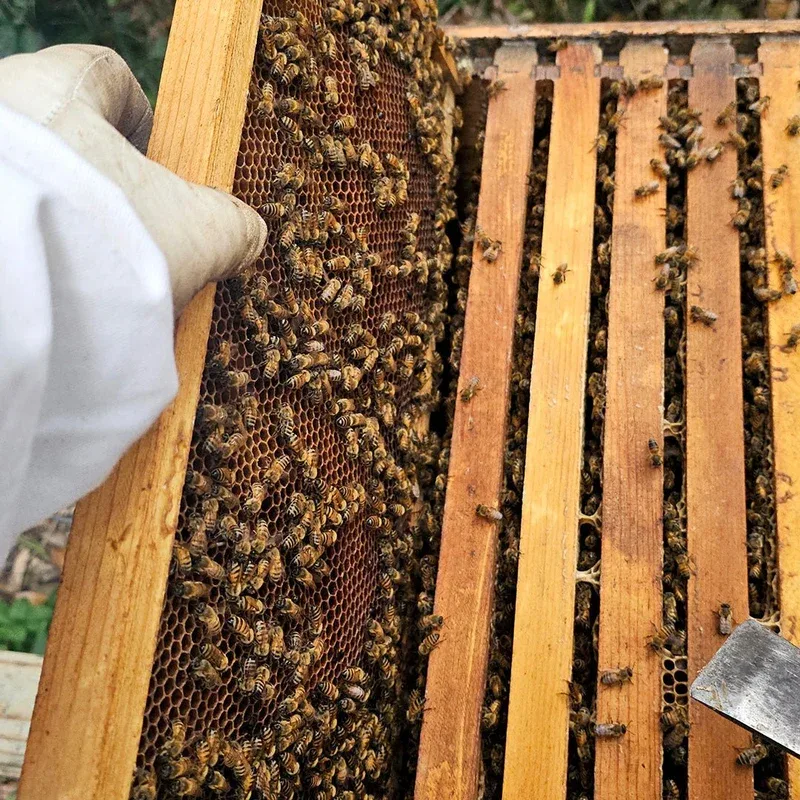
1. A Busy, Purposeful Entrance
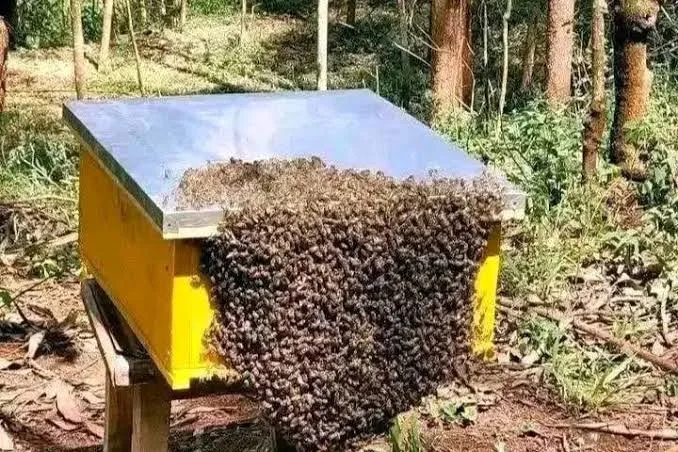
Stand beside the hive for a minute before you open it. In a healthy colony, bees fly in and out steadily. Many returning bees carry bright lumps of pollen on their legs, and a few guards stand at the entrance. A buzzing entrance means foragers are feeding the colony.
Watch for: piles of dead bees, bees crawling or staggering on the ground, or an entrance that is suddenly very quiet in warm weather. Check the weather and time of day first, since activity changes through the day.
2. A Laying Queen
Good news for beginners: you do not need to spot the queen every time. Fresh eggs tell you she is there. Look for tiny white eggs standing in the cells, like single grains of rice, one per cell, in the middle of the brood nest.
Watch for: no eggs at all, or several eggs in each cell. Check again in a few days before you worry.
3. A Solid Brood Pattern
On a good frame or bar, the brood forms a neat patch in the middle, like a bull’s-eye, with capped brood in the centre and pollen and honey in a ring around it. Healthy capped cells look slightly raised and even, and young larvae look plump and pearly white.
Watch for: a scattered, patchy pattern with lots of empty cells, or cappings that look sunken, dark or punctured.
4. A Sweet, Clean Smell
Healthy hives smell of honey, wax and flowers. It is one of the nicest parts of beekeeping.
Watch for: a sour or rotten smell. Smell alone cannot tell you what is wrong, so if you notice one, look closely at the brood and ask your trainer for help.
5. Enough Food
Check for nectar, capped honey and pollen. Bees should have food close to the brood. Capped honey is the sign that the honey is ripe.
Watch for: very little honey or pollen, especially in dry spells. If stores are low, feed or ask your trainer what to do.
6. Calm, Steady Bees
Healthy bees move with purpose across the comb, and there are plenty of them. African bees can be naturally defensive, so “calm” is relative: they should respond to smoke and settle, not panic or fly at you endlessly. The colony should also grow, with more bees and more brood from one inspection to the next.
Watch for: bees with crumpled or deformed wings, bees that look shiny or hairless, or a colony that keeps shrinking.
7. A Clean Hive with No Pests
A healthy hive is tidy and dry. The entrance is clear, the comb is clean, and the bees keep intruders out.
Watch for: ants, beetles, wax moth webs or small worms in the comb, mites on bees or brood, or damp and mould inside.
Your 5-Minute Checklist
Copy this into a notebook or your phone, and use it at every inspection:
Busy entrance with pollen coming in
Eggs seen (queen laying)
Solid, even brood pattern
Sweet, clean smell
Honey and pollen stored
Calm, growing colony
No pests or damp
Write down the date, the weather and what you saw. After a few visits, you will start to notice patterns, and spotting problems early becomes second nature.
When Something Looks Wrong
Do not panic. One odd sign rarely means disaster, and many problems are easy to fix when found early.
If you see... | It might mean... | What to do |
|---|---|---|
No eggs | Queen problem, or a recent swarm | Check again in a few days, then ask your trainer |
Patchy brood | Queen or health issue | Ask your trainer, and keep notes |
Little food | Dry spell or lean season | Consider feeding, and give water |
Sour smell | Possible brood problem | Look closer and get advice |
Ants or beetles | Pests moving in | Clear the area, and add ant barriers |
Colony shrinking | Several possible causes | Check all seven signs and get help |
A single sign does not give a diagnosis, so use the whole checklist and ask for help when you are unsure.
How Often Should You Check?
In the busy, flowering season, about every two weeks is a good rhythm. In lean periods, or when the colony is settling after you installed it, look less often and let the bees get on with it. Open the hive on a warm, calm day, use a little smoke, work gently, and close it up again.
Quick Questions
How do I know if my bee colony is healthy?
Look for a busy entrance, eggs, a solid brood pattern, a sweet smell, enough food, calm bees and a clean hive.
Do I need to find the queen?
No. Eggs and a steady brood pattern show she is laying.
What does a healthy brood pattern look like?
A compact patch with few empty cells, slightly raised, even cappings and plump white larvae.
Should a healthy hive smell?
Yes, but sweetly, of honey and wax. A sour or foul smell needs a closer look.
Are African bees supposed to be defensive?
They can be. What matters is that they settle with smoke and do not stay frantic.
What if I am not sure?
Take notes and photos, and ask an experienced beekeeper or your trainer.
Learn with Us
The best way to learn is to look at real hives with someone beside you. We train beginners, help you set up your apiary, and provide a market for your produce. Contact us any time: https://horizonbeeafrica.com/contact
Once you know these seven signs, you can open any hive with confidence.
Stay safe: wear full protective gear for every inspection. If you know you react badly to stings, speak to a health professional first.


Comments
0 comments