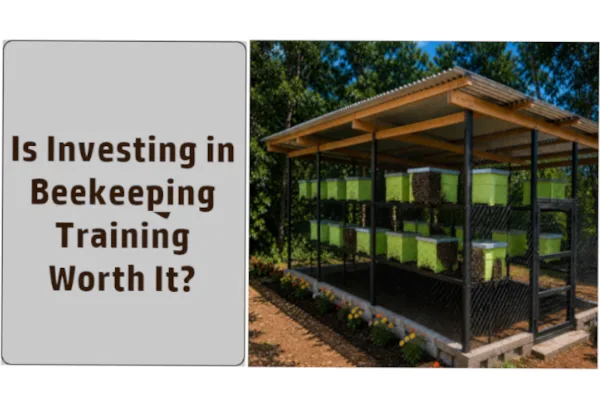
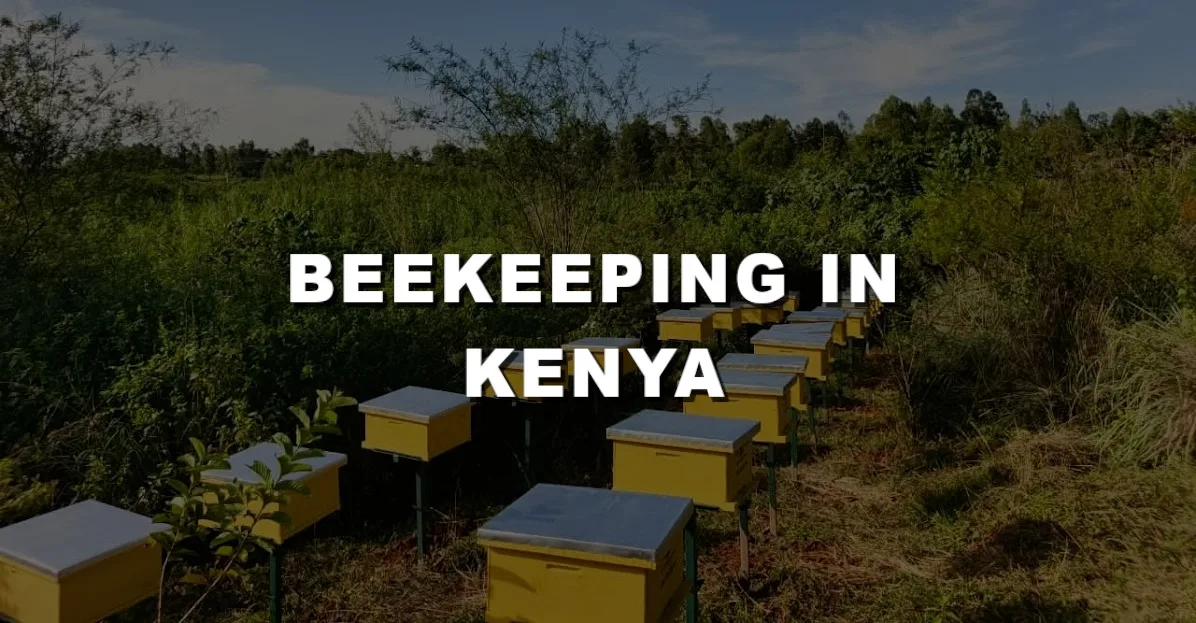
Good beekeeping training pays for itself. It helps you keep more colonies alive, harvest at the right time, and sell products that buyers accept. This guide to beekeeping training in Kenya shows the three ways to learn, what a 50-hive start costs, and what trained beekeepers can earn.
So, Is Beekeeping Training Worth It?
For most beginners, and for anyone planning 50 hives or more, yes. Here is the simple maths. Losing one colony costs you the hive (KSh 4,500) plus a year of honey (about 25 kg at KSh 800 per kg, or KSh 20,000), which is roughly KSh 24,500. Lose ten colonies, and that is about KSh 245,000. Training is meant to prevent exactly those losses.
Estimates are based on a standard Langstroth hive.
If you already keep bees successfully, you may only need a refresher or a course on a new product like propolis or bee venom. For everyone else, learning first is the cheaper route.
There are Three Ways to Learn beekeeping in Kenya and beyond
The best results come from combining all three.
1. Oral training: learn the basics first.
Before your hives start producing, sit down with a trainer and learn how a colony works, which hive suits you, how to pick a site, how the seasons affect your bees, and how the business side works. It is relaxed, low-risk, and gives you the confidence to start.
2. Practical training: learn with real hives.
This is where it clicks. You learn to light a smoker, use a hive tool, bait hives, inspect colonies, spot problems early, and harvest. Practising on your own hives, with a trainer beside you, builds skill fast.
3. Online training: keep learning all year.
Video lessons and learning platforms let you revisit a topic whenever you need it: a refresher before harvest, a question about pests, or a new product like propolis or bee venom. Beekeeping changes with the seasons, and online learning keeps your knowledge fresh between visits.
Why Training Protects Your Profit
Most beginner losses are avoidable. Trained beekeepers avoid:
Empty or abandoned hives from poor placement or baiting
Colonies lost to ants, honey badgers or pests
Unripe honey that sells badly
Rejected products, like venom or propolis that is contaminated or poorly stored
Neglect, the quiet reason many small apiaries fade
Each saved colony keeps producing for years.
Why Start with 50+ Hives?
Many beginners start with 10 or 20 hives, feel the investment is small, and drift away from them. A serious start of 50 or more hives changes your behaviour and your results:
You commit to a routine, because the investment deserves it.
Production flows steadily. With many hives, you can harvest in rotation, so honey, wax and other products come out regularly instead of once a year.
Buyers like steady supply. A consistent volume opens doors to bulk buyers.
Equipment is shared. One extractor, one smoker and one set of tools serve all your hives.
You can add more products, such as propolis and bee venom, which need enough hives to be worth the effort.
Learn first, though. Fifty hives with the right knowledge is a strong start. Fifty hives without it is an expensive way to learn.
Starter Budget for 50 Hives
Using our current prices:
Item | Standard Langstroth (KSh) | Deep super (KSh) |
|---|---|---|
50 hives | 225,000 | 250,000 |
2 protective bee suits (KSh 3,500 each) | 7,000 | 7,000 |
1 smoker | 2,000 | 2,000 |
Total | 234,000 | 259,000 |
Estimates. Stands, hive tool, gloves, gumboots, an extractor (a small centrifugal one costs about KSh 34,000) and transport are extra, so ask for a current quote.
What Could 50 Hives Earn?
Here is a simple honey example showing what good training can protect.
Assumptions: 25 kg of honey per productive hive per year, sold at KSh 800 per kg. Without training, we assume half your hives (25) stay productive. With training, we assume 40 of 50 do.
Productive hives | Honey income per year | |
|---|---|---|
Without training | 25 | KSh 500,000 |
With training | 40 | KSh 800,000 |
That is a KSh 300,000 difference from the same 50 hives, in this example.
Extra income streams from the same hives:
Propolis: about 5 kg per season from 50 hives with traps, worth roughly KSh 15,000 to KSh 30,000 at KSh 3,000 to 6,000 per kg.
Beeswax: from your cappings and clean comb, for sale or for making balms.
Bee venom (optional, needs a collector and training): in our planning scenarios, 50 hives could give roughly KSh 50,000 a month in a cautious case and up to about KSh 225,000 a month in the best case.
These are examples, not promises. Real results depend on your area, season, forage, management and market, and figures are before costs such as labour, transport and replacing colonies.
What a Good Course Covers
How a colony works and behaves
Choosing a hive and a site
Getting bees in: baiting, swarms and colonisation
Inspecting hives safely with a smoker and hive tool
Your local flowering calendar and the seasons
Protecting hives from ants, honey badgers and pests
Harvesting and handling honey, wax, propolis and venom
Business basics: costs, records and selling
How to Choose a Good Course
Look for hands-on practice with real hives, small groups, your own hive type and local conditions, follow-up support, and a clear route to market.
What Your First Year Looks Like
Learn. Take your oral and practical training.
Set up. Place your hives and bait them.
Settle. Let colonies move in and build up.
Harvest and grow. Take your first products, then add hives.
A Word on Safety
Bees sting, so a good course teaches you to work calmly with proper protective gear. If you know you react badly to stings, tell your trainer and speak to a health professional first.
Quick Questions
Is beekeeping training worth it?
Yes. It helps you avoid the common mistakes that cost colonies and harvests.
Do I need experience?
No. Good training starts from the very beginning.
How many hives should I start with?
To learn, 5 to 10 is fine. If you want real income, a start of 50 or more, with the right training, works best.
Can I learn online only?
Online lessons are a great support, but hands-on practice with real hives is what builds confidence.
Can I keep bees with a full-time job?
Yes. Hives need regular visits, not constant attention.
Train with Us
At Horizon Bee Africa, we partner with beginners who want to start beekeeping. We train you, help you set up, and provide a market for your produce. We also work with beekeepers who want to grow beyond honey into wax, propolis and bee venom. Talk to us here: https://horizonbeeafrica.com/contact
A trained beekeeper with a good apiary is not just keeping bees. They are running a business.
Comments
0 comments