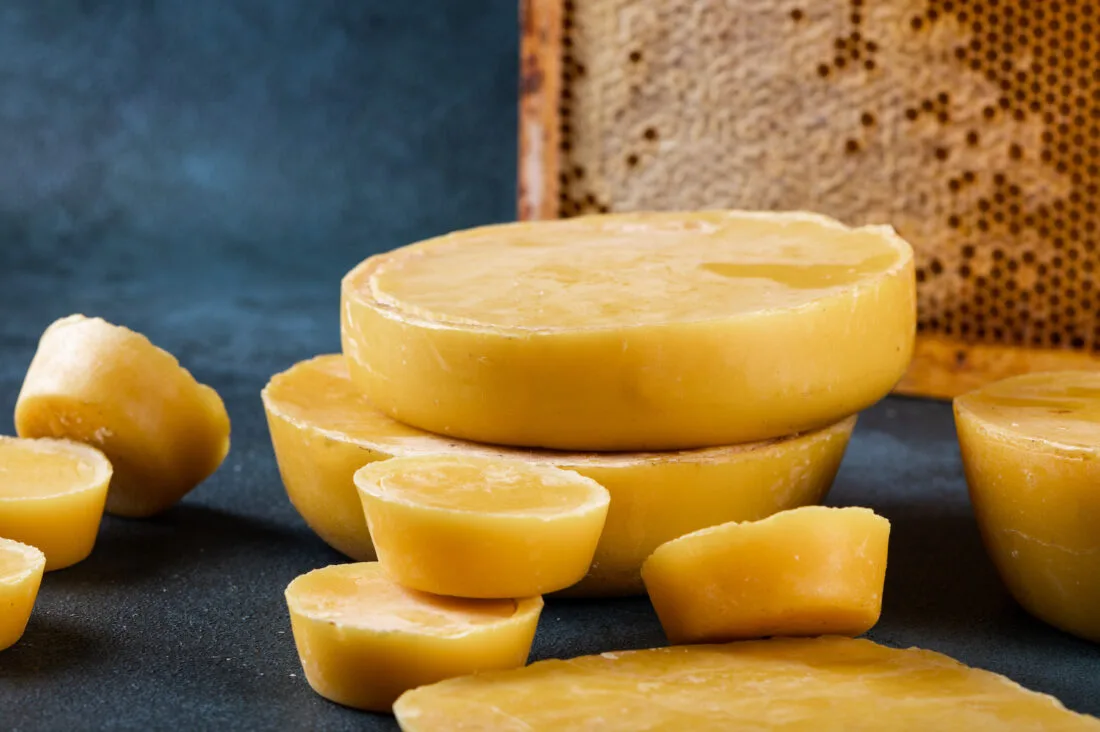
In Nakuru, Kenya, a lip balm made from beeswax sells for Ksh 700. A jar of body butter sells for Ksh 1,650. Both come from wax that many beekeepers would have thrown away.
That is the power of beeswax. Once you know how to use it, one hive can give you much more than honey. This guide shows you how to start, step by step, with simple tools and a small budget. It also shows where you can find support and a market along the way.
One Hive, Many Products
A single hive can give you honey, beeswax, propolis, pollen and royal jelly. You can sell each one on its own, or turn it into something new.
This changes how you earn. If you only sell raw honey, you get paid once. If you also turn the wax into balms and body butters, you earn from the same bees several times over.
Why Beeswax Is Good for the Skin
Beeswax does three useful things:
It thickens products, so a balm holds its shape.
It softens the skin.
It makes a thin layer on the skin that keeps moisture in.
That is why almost every natural lip balm and salve starts with beeswax. It is also natural and renewable, which many customers like.
Step 1: Clean Your Wax
Good balm starts with good wax. Clean, light-coloured wax gives a smoother and better-smelling product.
Collect cappings and clean comb. Keep them apart from old, dark comb.
Melt the wax slowly in a water bath. Never melt it over direct fire.
Pour it through a fine cloth to remove dirt, propolis and bee parts.
Let it cool slowly. Scrape off any dirt at the bottom of the block.
If the wax is still dirty, repeat the process.
Step 2: Choose Your Ingredients
A simple balm needs only three things:
Beeswax: makes the balm firm.
A butter: shea butter is a great choice and is easy to find in Africa. Cocoa butter also works well.
A liquid oil: coconut, sweet almond, olive or jojoba oil all work. They make the balm smooth and easy to spread.
You can also add a few drops of vitamin E or a skin-safe scent.
Step 3: Get the Mix Right
Always weigh your ingredients on a scale. Do not measure with spoons or cups, because the results will not be the same every time.
Lip balm: A common guide is one part beeswax to three to five parts oil. Many makers start with about 25 to 30 percent beeswax, 30 to 40 percent shea butter, and the rest liquid oil.
In hot weather, add a little more beeswax so the balm does not melt in a pocket.
If the balm feels hard or waxy, add more oil.
Body balm or salve: Use less beeswax than in a lip balm, so it spreads easily on bigger areas of skin.
Body butter: Use more butter and oil, and only a small amount of beeswax, for a soft and creamy feel.
These are starting points only. Make a small test batch first, then change the mix until you like it.
Step 4: Make Your Balm
Melt the beeswax and the liquid oil together slowly in a double boiler (a bowl over hot water).
Take it off the heat. Add the shea butter last and let the warmth melt it. If shea butter gets too hot, it can turn grainy.
Add scent or flavour when the mix has cooled a little.
Pour into clean tubes or tins.
Leave it alone until it sets. If you move it while it cools, the top can turn out bumpy.
A small warning: for lip balms, use only flavours and oils that are safe for lips.
Step 5: Pack, Label and Follow the Rules
A neat product sells for more. Here is what to do:
Use clean, tight containers.
Write the ingredients on the label.
Add a batch number and the date you made it.
Keep your tools and workspace very clean.
Balms without water are safer from germs, but creams and lotions that contain water need a preservative.
Before you sell, check the rules from your national standards office, such as KEBS in Kenya. Also try your product on a few friends first, to make sure nobody gets a skin reaction.
Who Is Already Doing This?
You are not the first. Here are some real examples.
Burt's Bees (worldwide). This famous brand uses beeswax that it says comes from beekeepers in Tanzania and Vietnam, and shea butter from West Africa. In 2021 it launched SheKeeper, a $2 million, three-year project with USAID and its suppliers to help women in shea areas start beekeeping. This shows that big brands are buying African wax.
Hive Treasures (Zimbabwe). Rugare Marufu from Gweru started with her father's bees. Today she makes a Beeswax Honey Butter Cream, and she also trains other people in beekeeping.
Oh Honey (Kenya). Lisa Njenga from Nakuru first sold organic honey. Then she began making lip balm and body butter from her wax and honey.
Beeutiful Creations (Rwanda). This group works with local co-operatives to make beeswax candles, soaps and lip balms in flavours like Wild Orange, Peppermint and Cocoa.
Women's groups in Kenya. A CARE and WWF project gave one group 35 beehives. At first they only sold honey. After training, they started turning their leftover wax into soap, lip balm and candles.
There Is Still Plenty of Room to Grow
Kenya could produce more than 10,000 tonnes of beeswax a year, according to a 2025 report. But in 2023, the country produced only about 3,200 tonnes. That gap means there is a lot of opportunity for beekeepers who add value to their wax, especially if they join together in co-operatives.
You do not have to do all of this alone. At Horizon Bee Africa, we partner with beekeepers at different stages.
If you are a beginner. Thinking of starting beekeeping? We partner with beginners and train them, so you start with the right skills. We also provide a market for your produce, so you know where your honey and wax will go once you harvest.
If you already produce honey. Many beekeepers stop at honey. If you want to scale up, we can help you grow your production and add other bee products, starting with beeswax.
Training and production. We train beekeepers to harvest, melt, clean, and store wax, and we work with you to produce high-quality beeswax.
Bulk buying. We buy cleaned beeswax in bulk. Clean wax is light in colour, free of dirt and bee parts, and stored dry. The cleaner your wax, the easier it is to sell.
Whether you are just starting out or already keeping bees, get in touch to see how we can work together.
Contact us. https://horizonbeeafrica.com/contact
How to Get Started
Start small. Make a few test batches of one product, like lip balm.
Perfect one recipe before you add more.
Use clean, good-quality wax.
Pack well and label properly.
Test the market at local fairs, shops and online.
Add new products slowly, like salves, soaps and candles.
Think about teaming up with other beekeepers to share wax and equipment.
Find a partner who offers training and a steady market for your produce.
Final Word
Your hives can do more than make honey. With some clean wax, a few simple ingredients and a little patience, you can make products that people love to buy. So the next time you cut comb, don't throw the wax away. It may be your best product.
Comments
0 comments