Open a healthy beehive and you will notice that every crack and gap seems to have been neatly sealed with a sticky, brownish-green substance. That substance is propolis, and bees have been using it far longer than people have been studying it. But what exactly is it, where does it come from, and does it really do anything for human health?
Where Do Bees Get Propolis?
Bees do not make propolis from scratch. They collect it from plants. Foragers gather resins and sap from tree buds, bark and wounds in plants, carry them back to the hive, and mix them with wax and their own secretions. The result is a sticky material that hardens as it cools.
Because propolis comes from local vegetation, its character depends on where the hives stand. Propolis from a poplar-rich region will differ from propolis gathered in an African acacia and eucalyptus landscape. Researchers have long noted that this plant origin is one reason propolis varies so much in composition from one region, and even one season, to another.
What Do Bees Use It For?
Inside the hive, propolis works as sealant, building material and protection. Bees use it to repair cracks, narrow entrances, steady the internal temperature, and keep out intruders and harmful microorganisms. In effect, it helps keep the colony's home clean and sterile. That protective role is exactly why scientists became interested in its potential for people.
How People Use Propolis
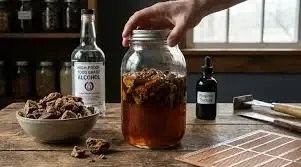
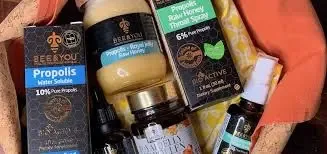
Propolis has been used traditionally for centuries. Today it appears in tinctures and liquid extracts, throat sprays and lozenges, capsules, toothpaste and mouthwash, and skincare products such as creams, balms and soaps. For beekeepers, it also represents a second income stream beyond honey, one that many producers still overlook.
What Does the Research Say?
Propolis is chemically complex. Studies have identified more than 600 constituents, including flavonoids, phenolic acids, terpenoids and amino acids. Most researchers credit its biological activity mainly to its flavonoid content.
Immune function. Laboratory and animal studies suggest propolis can influence both the innate and adaptive branches of the immune system. Reviews describe effects on immune cells such as macrophages and on cytokine production, and some work points to an immunomodulatory role, meaning it may help balance immune responses rather than simply boost them.
Inflammation. A recent systematic review and meta-analysis found that propolis supplementation appeared to reduce markers of inflammation and oxidative stress, though its authors note that clinical use still needs further validation.
Antimicrobial and antiviral activity. Reviews report broad antibacterial and antiviral effects in laboratory settings. Interest has grown in respiratory health in particular, yet researchers openly acknowledge that rigorous randomized clinical trials in this area are still lacking.
Other areas. Wound healing, oral health and cardiovascular support are among the benefits most often investigated.
So is propolis a proven immune booster? Not yet, and a trustworthy article should say so. Much of the strongest data comes from cell and animal studies, and human trials are fewer, smaller and often use different propolis types, doses and preparations, which makes results hard to compare. The sensible conclusion is that propolis is a promising natural product with a plausible mechanism, not a cure and not a replacement for medical care.
Safety deserves a mention too. Propolis can trigger allergic reactions in some people, particularly those sensitive to bee products or certain plant resins. Anyone who is pregnant, has allergies or takes regular medication should speak to a health professional before use.
Quality and Standards: What Buyers Should Look For
Here is a challenge the industry still faces. Researchers have pointed out that there is no single, universally accepted quality standard for propolis, although some countries, including Brazil and China, have their own technical rules. Since composition changes with the plant source, quality has to be judged on several measures rather than one.
Commonly used indicators include:
Total flavonoid and phenolic content: a guide to the active, valuable fraction of the resin.
Resin and wax content: good raw propolis is rich in resin, while a high proportion of wax or debris lowers its value.
Cleanliness: raw propolis should be free of wood, soil, dead bees and other impurities.
Heavy metals: lead, cadmium and arsenic are checked for safety. One study of commercial liquid products found that heavy metal levels varied noticeably between countries of origin.
Authenticity: testing can reveal adulteration, for example the addition of cheaper poplar gum.
Honest labelling: the same study found that the flavonoid content of the products it tested matched the labelled values, which is encouraging but not something to assume for every brand.
For consumers, the practical advice is to buy from transparent producers who can say where the propolis comes from, how it was processed, and how it was tested.
Turning Propolis into Income
For African beekeepers, propolis is an opportunity. Quality starts at the hive, and a few habits make a real difference:
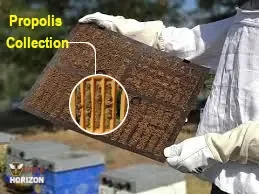
Harvest from scrapings or propolis traps and keep it separate from wax and wood.
Store it clean, dry, cool and away from sunlight in airtight containers.
Avoid contamination from smoke residue, chemicals and soil.
Record where and when each batch was harvested.
Clean, well-documented propolis commands a better price, and buyers like us are actively looking for it. If you produce propolis, get in touch to discuss quantities, quality requirements and pricing.
Conclusion
Propolis shows how much a beehive offers beyond honey. The science behind its immune and anti-inflammatory potential is promising, though human evidence is still maturing, and its quality varies widely. For consumers, that means choosing carefully. For beekeepers, it means clean harvesting and good records. Both groups benefit when the industry holds propolis to a higher standard.
Comments
0 comments