
Most beekeepers know honey. Far fewer know that a single gram of bee venom can sell for more than a bucket of honey. That gap is why bee venom is one of the most talked-about opportunities in African beekeeping. But it is also a business where the wrong plan can leave you with a lot of hives and very little income.
Here is how it works, what it can earn, and where it can go wrong.
How much venom does a colony give?
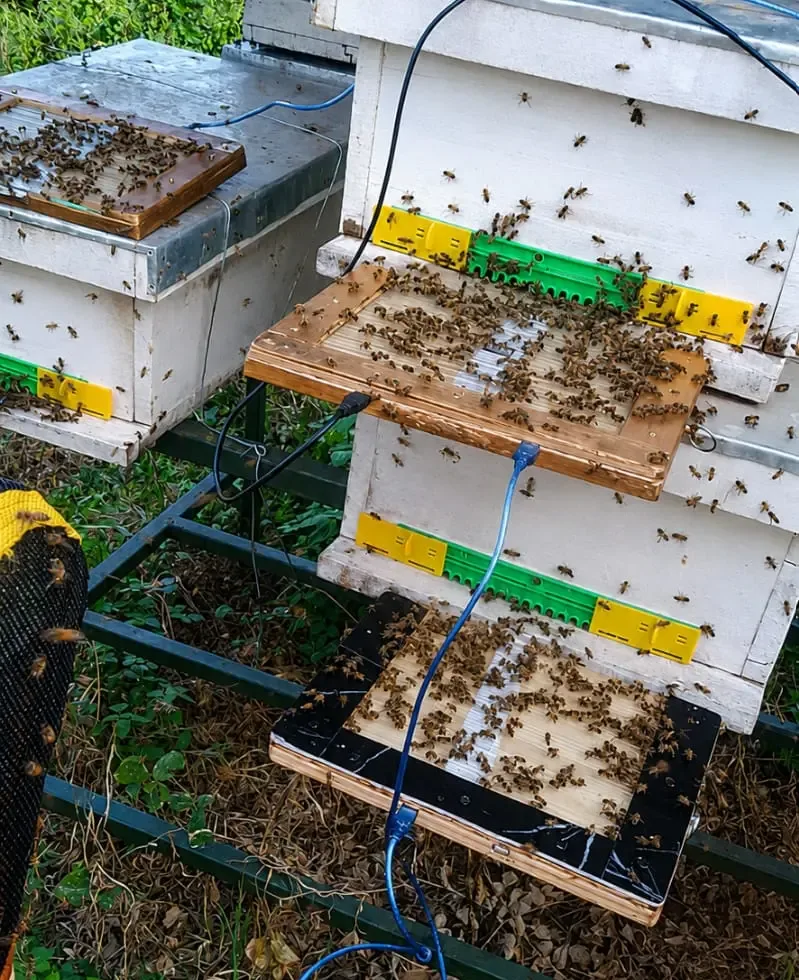
Bee venom is collected in tiny amounts. As a working guide, 3 to 4 strong colonies give about one gram per collection. A single colony gives very little. The money is in the combined volume.
You can collect often. Many producers collect about three times a month, and some do it once a week, depending on their schedule and how strong their colonies are. Proper collection does not kill the bees, but colonies need to be healthy and have time to recover.
What is it worth?
Bee venom sells for about KES 2,000 to KES 6,000 per gram, depending on the buyer, the quality and the market. For example, Horizon Bee Africa currently buys at KES 4,500 per gram.
What the numbers look like
Take the Horizon Bee Africa price of KES 4,500 per gram and assume 3 to 4 colonies per gram, per collection.
Strong colonies | Venom per collection | Per month (3 collections) | Income per month at KES 4,500 |
|---|---|---|---|
25 | 6 to 8 g | 19 to 25 g | KES 84,000 to 112,000 |
100 | 25 to 33 g | 75 to 100 g | KES 337,000 to 450,000 |
Collect weekly instead, about four times a month, and 100 colonies could give 100 to 133 g, or roughly KES 450,000 to 600,000 a month.
If you keep collecting for eight months of the year, 100 colonies at three collections a month could bring in about KES 2.7 million to 3.6 million. These are illustrations, not promises. Yields vary by season, colony strength, forage and your skill. But they show why volume matters so much.
The catch: number of hives matters
Most beekeeping advice says to start small and stay safe. With bee venom, that advice can hold you back.
Compare two beekeepers in their first year:
Beekeeper A installs 50 hives and gets 50 percent colonised. That is 25 working colonies.
Beekeeper B installs 200 hives and gets 50 percent colonised. That is 100 working colonies.
Both had the same success rate, but B produces four times the venom. A at three collections a month earns about KES 84,000 to 112,000. B earns KES 337,000 to 450,000. The same luck gives very different results because venom is sold by the gram and grams come from numbers.
Cost matters too. 200 standard hives at KES 4,500 each is KES 900,000, against KES 225,000 for 50. That is a real investment, so you can build up in stages. But set your plan around reaching a volume that pays, not around staying small. Hives that are installed and waiting for colonisation count as well, because every one is a chance for a working colony.
Startup costs to plan for
Hives: your biggest cost. Plan for the number of hives you want to reach, not only the ones you start with.
A venom collector: a separate device, used on colonies to collect the venom. Our Bee Venom Collector is listed in the shop at KES 37,000.
Protective gear, tools and training: collection needs skill and safety. Do not skip training.
Running costs: apiary site, labour, transport, and time for regular collection.
Who buys bee venom?
This is where many people get stuck. Selling is harder than producing. An individual producer makes small amounts, while buyers want larger quantities. A few grams a month is hard to sell to a company that wants chunks.
There is good news. Companies in Kenya buy bee venom, including Horizon Bee Africa, Savannah Honey and Apiculture Ventures. The smart route is to partner with a company. A buyer who has already agreed to take your venom gives you a market before you build your apiary, so you can start with a clear plan. Ask each buyer about their quality standards, minimum quantities and payment terms.
The risks and how to manage them
Bee venom is not risk-free, but most risks can be handled.
Colonies don't take. Some hives stay empty. Manage it by installing more hives than you need and baiting them well.
Weak colonies and absconding. Keep colonies healthy and fed, and don't over-collect.
Seasons and drought. Spread your apiaries across different sites and keep records so you can plan around slow months.
Safety. Collectors and workers must be trained and protected, and anyone allergic to stings should stay away from the work.
One buyer and price changes. Prices range widely, so agree terms in advance and keep more than one buyer in mind.
Quality. Buyers pay for clean, correctly handled venom. Learn the standards before you collect.
Is it profitable?
It can be, and the market in Africa is growing. But it rewards people who plan for volume, training and a buyer from day one. A few hives can teach you the skills, but a business that pays is built on enough strong colonies and a company ready to buy.
If you want to start properly, talk to us about partnership, training and buying arrangements.
Comments
0 comments